

 Start a conversation
AI system design and integration
Integration architecture for AI systems: the real decision framework for South African businesses

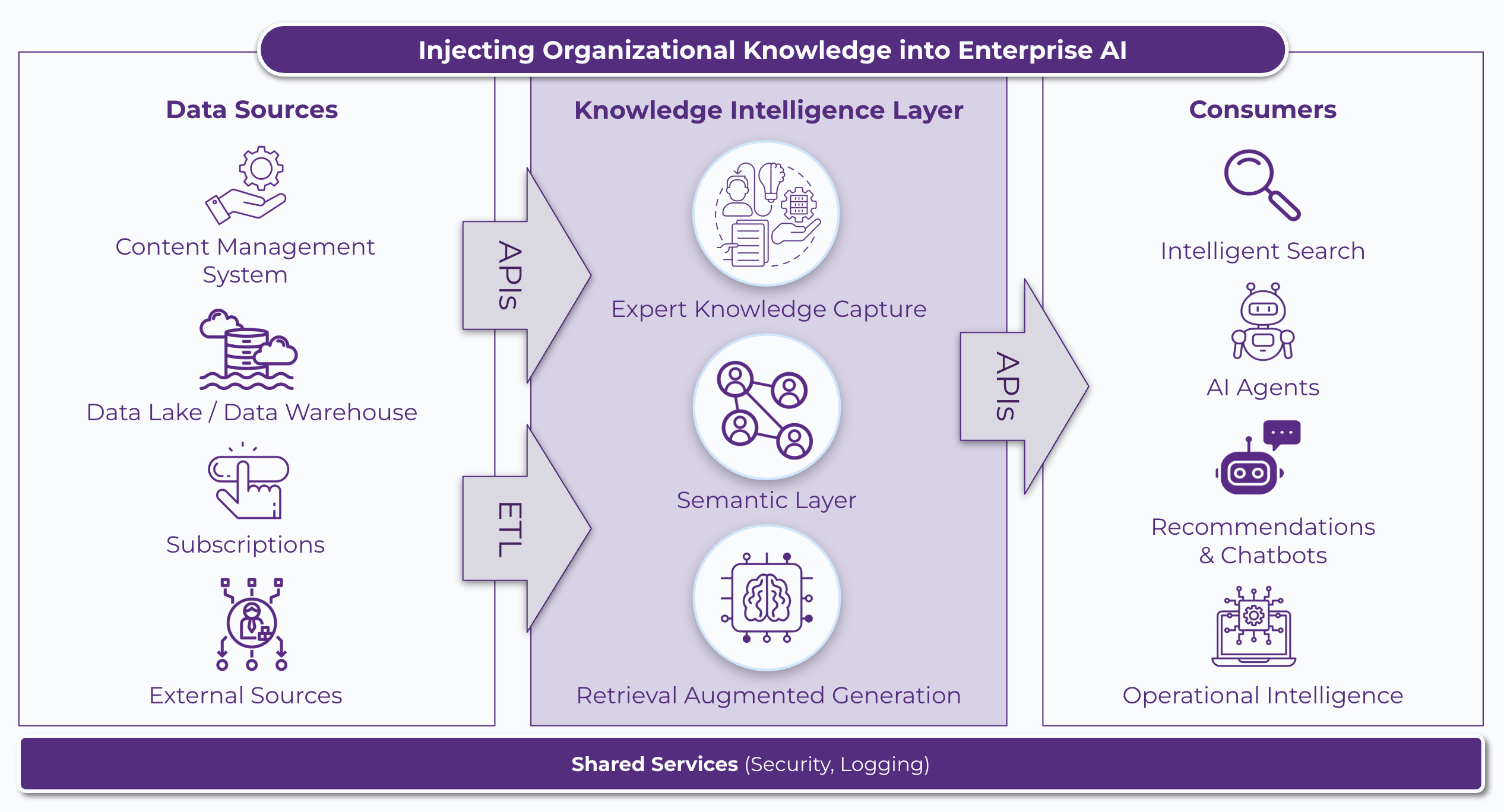
AI integration architecture is the set of design decisions, orchestration layer, event triggers, model APIs, memory storage, human checkpoints, that determine how AI talks to your existing systems without you rebuilding those systems from scratch. Get this wrong and you end up with a chatbot bolted onto a spreadsheet that breaks the first time two customers message at once. Get it right and the AI becomes one more well-behaved component in a system you already understand.
Most content on this topic assumes you're integrating against SAP, Salesforce, and a Kafka cluster. If that's your stack, the patterns below still apply, just at a different scale. But the honest architecture problem for most South African businesses looks like one disconnected spreadsheet, one WhatsApp Business number, and no CRM at all. This piece is written for that reality.
What AI integration architecture actually means
The direct definition
Integration architecture is the plumbing between your AI component (a model, an agent, a RAG pipeline) and everything else: your database, your WhatsApp number, your payment gateway, your staff. It answers three questions. Where does the AI sit in the request flow? What can it read and write? Who checks its output before it reaches a customer or a ledger?
Why 'architecture' matters more than the model you pick
Swapping GPT-4 for Claude or Llama is a config change if your architecture is sound. If it isn't, swapping models won't fix anything, because the failure was never the model. It was the fact that nothing validated the model's output before it updated a customer record, or that two workflows wrote to the same spreadsheet row at the same time. Architecture decisions outlive model choices by years.
The SA-specific version of this problem: one spreadsheet, one WhatsApp number, no CRM
A five-person business in Durban running bookings off a Google Sheet and a personal WhatsApp number doesn't need an event bus. It needs a workflow tool that can read that sheet, reply on WhatsApp, and escalate to a human when the sheet gets confusing. That's a real architecture, just a small one. The patterns are the same ones enterprises use, scaled down honestly.
The five patterns that cover almost every real build
Orchestration layer: keeping AI out of business logic
An orchestration layer (n8n, in most of our builds) sits between the trigger and the model. It decides what gets sent to the AI, what the AI is allowed to touch, and what happens next. The rule that matters: business logic (pricing, refund rules, stock checks) lives in the orchestration layer and your systems of record, not inside a prompt. Prompts drift. Workflows don't, if you build them properly.
Event-driven integration: Kafka/RabbitMQ and why most SME workflows don't need it
Event-driven architecture, message queues, pub/sub, is built for high-throughput systems where many services need to react to the same event independently. A bank's fraud detection stack needs this. A business handling 200 WhatsApp conversations a day does not. A single orchestration workflow with clear triggers does the same job with a fraction of the operational overhead. Don't let an enterprise diagram talk you into infrastructure you'll never use.
Model as a Service: treating each model as its own microservice
Model as a Service means you call a model through an API rather than hosting weights yourself. For almost every SA business, this is the right call. You pay per request, you're not managing GPU infrastructure, and you can switch providers when pricing or performance changes. The question isn't whether to use MaaS, it's which provider for which task: a cheaper model for classification, a stronger one for anything customer-facing.
RAG: grounding the model in your actual data
Retrieval-augmented generation pulls relevant information from your own documents, pricing sheets, or policies before the model answers. Without it, the model answers from general training data and will confidently invent your return policy. RAG architecture is simple at small scale: store your documents as embeddings, retrieve the relevant chunks per query, feed them into the prompt. This is often the single highest-leverage addition to a WhatsApp bot that's giving generic answers.
Agentic patterns and MCP: standardising tool access for agents
Model Context Protocol (MCP) is a standard that lets an AI model call external tools, databases, APIs, in a consistent way rather than every integration being custom-built. It matters because agentic systems (AI that decides which tool to use, not just what to say) become unmanageable fast if every tool connection is bespoke. MCP gives you one interface for the model to request a calendar check, a CRM lookup, or a payment status, instead of ten different ad hoc connectors. For most SA builds today, this is still emerging infrastructure, but it's the direction tool-calling architecture is heading, and it's worth designing for now rather than retrofitting later.

Where human-in-the-loop fits in the architecture
Why checkpoints aren't optional for anything touching money or compliance
Human-in-the-loop isn't a fallback for when the AI fails. It's a designed checkpoint for anything involving money, personal data, or an irreversible action. A refund over a certain amount, a POPIA data request, a legal commitment, these go to a human by design, not by accident. Read building human-in-the-loop properly for the specific triggers worth hardcoding.
What this looks like on WhatsApp specifically
On WhatsApp, this usually means the bot handles the conversation until a condition fires (customer asks for a refund, mentions a complaint, requests a quote above a threshold), then hands off to a staff member inside the same chat thread, with the full conversation history attached. Nobody repeats themselves and nothing silently falls through. See how human handoff actually works on WhatsApp for the mechanics.
The memory and state problem nobody mentions upfront
n8n workflows are stateless by default
Here's the part most guides skip: n8n, like most workflow tools, runs each trigger as a fresh execution with no memory of the last one. Ask it "what did I say five minutes ago?" and by default it has no idea. This is fine for a single-step automation. It breaks any WhatsApp bot that's supposed to hold a conversation.
Why you need Redis or Postgres for conversation history
The fix is external state storage. Redis for fast, short-lived conversation context, or Postgres for anything you need to query or keep long-term (order history, past conversations, customer preferences). The workflow becomes: incoming message comes in, workflow pulls the customer's recent history from the store, sends it to the model alongside the new message, writes the updated history back. This pattern underpins connecting WhatsApp to n8n properly rather than as a one-shot demo.
What breaks if you skip this step
Without this, the bot forgets what the customer just told it, asks for the same information twice, and contradicts itself across messages. It looks like a model problem. It's actually a missing state layer, and no amount of prompt tweaking fixes it.
Official vs unofficial WhatsApp API: a real architecture decision
What the Meta Cloud API requires and why
The official Meta Cloud API requires business verification, a registered WhatsApp Business Account, and approved message templates for anything outside a 24-hour customer service window. It's slower to set up and has stricter rules on outbound messaging. In exchange, it's stable, supported, and won't vanish overnight.
Why unofficial APIs carry ban and compliance risk
Unofficial APIs (unofficial libraries automating the consumer WhatsApp app) are faster to stand up and feel cheaper. They also violate WhatsApp's terms of service, which means number bans with no appeal process, and no audit trail if a customer disputes what was sent. For any business handling real transactions, this is architecture built on a foundation that can disappear without warning. We cover which WhatsApp API your business actually needs in more detail, because the right answer depends on volume and risk tolerance, not just cost.
What this means under POPIA and client contracts
POPIA requires you to know where customer data goes and to be able to account for it. An unofficial API gives you no guarantees about data handling, storage location, or retention, which makes POPIA compliance close to impossible to demonstrate if you're ever audited or asked. See what actually needs to be true for POPIA compliance before committing to either path.
How to integrate AI into a legacy system without breaking it
Define the objective before picking tools
Start with the business outcome: fewer missed bookings, faster quote turnaround, less manual data entry. Not "we should have an AI chatbot." The objective determines which pattern you need and which parts of the legacy system the AI has to touch at all.
Isolate the component, don't rewrite the system
Wrap the AI around the legacy system, don't rebuild the legacy system around the AI. If customer records live in an old Access database, build an integration layer that reads and writes to it through its existing interface, rather than migrating everything to justify the AI project. This is the core of how to integrate AI into an existing system without ripping it out, and it's the difference between a four-week project and a four-month one.
Pilot in a non-critical workflow first
Run the AI component on something that won't hurt the business if it's wrong for two weeks: FAQ answers, appointment reminders, order status lookups. Not refunds, not stock allocation. Prove the architecture holds before it touches anything that costs money if it fails.
Monitor, then expand
Once the pilot is stable, with logging, error handling, and human checkpoints working as designed, expand scope one workflow at a time. Stopping workflows from failing silently matters more here than almost anywhere else, because a quiet failure in a pilot can hide for weeks before anyone notices.
Why most integration projects fail
Data quality and governance gaps
An AI layered on top of inconsistent, duplicated, or unlabelled data will produce inconsistent answers, no matter how good the model is. Most failed projects trace back to this before they trace back to anything architectural.
Legacy incompatibility (and why it looks different for a 5-person SA business than a bank)
For a bank, legacy incompatibility means a 20-year-old mainframe with no modern API. For a five-person SA business, it means a spreadsheet with inconsistent column names and three different people editing it manually. Both are legacy problems. The fix for the second one is far cheaper, but only if you diagnose it correctly instead of assuming you need enterprise-grade middleware.
Skills gaps and vendor lock-in fears
Businesses either lack the in-house skill to maintain what gets built, or they avoid building anything because they're worried about depending on one vendor forever. Both are solvable with the right ownership model, which is why the build-vs-buy decision below matters more than the technical pattern you pick.
Build in-house, buy a vendor, or integrate via API
The decision rule
Build in-house only if AI integration is core to your competitive advantage and you have the engineering capacity to maintain it. Buy a vendor product if your need is generic and well-served by existing tools. Commission a custom integration (our model at Sagentics) when you need something specific to your workflow but don't want to carry a full engineering team. Most SA SMEs land in that third category. The honest build vs buy answer walks through this with real numbers.
Cost-per-conversation economics in ZAR
Model API costs for a WhatsApp conversation typically run a few cents to a few rand depending on message length and model choice. The real cost driver isn't the model, it's the architecture around it: a poorly designed workflow that calls the model five times per conversation costs five times more than one that calls it once with proper context. Good architecture is a cost control, not just a reliability one.
A working reference architecture for an SA small business
Webhook to n8n to LLM to CRM, end to end
A customer messages your WhatsApp number. Meta's Cloud API sends a webhook to n8n. n8n pulls conversation history from Postgres, checks a lightweight RAG store for relevant product or policy info, sends the assembled context to the model, gets a response, checks it against human-in-the-loop rules, and either replies directly or flags a staff member. The reply, and any new customer data, gets written back to your CRM or spreadsheet. This decision tree, n8n versus custom code at each step, is covered in the decision rule for n8n vs custom code.
Where PayFast or Yoco sits in the flow
If the conversation ends in a transaction, a payment link generated through PayFast or Yoco drops into the same WhatsApp thread, with the payment status webhook feeding back into n8n to update the order record automatically. This is detailed in accepting payments through WhatsApp with PayFast or Yoco, and it closes the loop between a conversation and a completed sale without manual reconciliation.
What this costs to run month to month
For a typical small business handling a few hundred conversations a month, the monthly running cost (model API, hosting, WhatsApp API fees) usually lands in the low thousands of rand, not tens of thousands. The upfront build cost is the bigger number, and what custom AI actually costs over two years is worth reading before you commit, because the ongoing cost is almost always lower than people expect.
Common questions
What is AI integration architecture? It's the set of design decisions, orchestration, triggers, memory, APIs, human checkpoints, that determine how an AI component connects to your existing systems without requiring a full rebuild. Good architecture means the AI behaves predictably inside workflows you already understand, rather than becoming an unpredictable black box layered on top.
How do you integrate AI into an existing system without breaking it? Define the business objective first, isolate the AI component so it wraps around the legacy system rather than replacing it, pilot on a non-critical workflow, then expand once it's proven stable. Rewriting the legacy system to accommodate the AI is almost always the wrong move and the main reason projects overrun.
What are the main AI integration architecture patterns? Orchestration layers, event-driven integration, Model as a Service, retrieval-augmented generation (RAG), and agentic patterns using standards like MCP. Most SA small businesses only need the first three at meaningful scale, with RAG added once the bot needs to answer from specific business data rather than general knowledge.
What's the difference between embedding a model directly vs calling it via API? Embedding means hosting the model yourself, which requires GPU infrastructure and ongoing maintenance. Calling it via API (Model as a Service) means paying per request to a provider who manages the infrastructure. For almost every SA business, API calls are cheaper and far less operationally risky than self-hosting.
How do you integrate AI with legacy systems? Wrap an integration layer around the legacy system's existing interface, whether that's a database connection, a CSV export, or an API, rather than migrating the legacy data elsewhere first. Pilot the integration on a low-risk workflow, monitor it closely, and expand scope only once error handling and human checkpoints are proven to work.
What is Model Context Protocol (MCP) and why does it matter for integration? MCP is a standard that lets AI models call external tools and data sources through one consistent interface instead of custom-built connectors for each tool. It matters because agentic systems become hard to maintain once you have many bespoke integrations, and MCP reduces that to a single, reusable pattern.
Should AI components be built in-house or via API/vendor? Build in-house only if AI is core to your competitive edge and you have engineering capacity to maintain it long-term. Use a vendor product for generic, well-solved problems. Commission a custom integration when your workflow is specific but you don't want to carry a full engineering team, which covers most SA SME cases.
How do you keep humans in the loop in an AI-integrated workflow? Hardcode specific trigger conditions, refund amounts above a threshold, compliance-sensitive requests, complaints, that route the conversation to a staff member with full context attached. This isn't a fallback for AI failure, it's a designed checkpoint for anything involving money, personal data, or irreversible actions.
What causes AI integration projects to fail? Poor data quality feeding inconsistent answers, underestimating how legacy incompatibility shows up at small-business scale (messy spreadsheets, not mainframes), and skills gaps or vendor lock-in fears that stop a project from being maintained after launch. Most failures trace back to these, not to the model being used.
What's the ROI of good integration vs poor integration? Good architecture reduces model calls per conversation, prevents silent failures that cost staff time to fix manually, and avoids rebuild costs when requirements change. Poor integration often costs more to patch over eighteen months than a properly designed system costs to build and run from the start.
Why is n8n stateless by default and what does that mean for WhatsApp memory? n8n treats each trigger as an independent execution with no built-in memory of previous messages. For a WhatsApp bot meant to hold a conversation, this means you need external storage, Redis or Postgres, to save and retrieve conversation history on every message, or the bot will forget context and repeat questions.
What's the real difference between the official WhatsApp Cloud API and unofficial APIs for architecture decisions? The official Meta Cloud API requires business verification and template approval but gives you stability, support, and a defensible compliance position. Unofficial APIs are faster to set up but violate WhatsApp's terms, risk permanent number bans, and leave no reliable audit trail, which makes POPIA compliance very difficult to demonstrate.
For patterns specific to your use case, including AI build patterns for ecommerce and fintech or the mechanics of what AI system design implementation actually involves, review those pieces against your current setup. If you need a technical review of your architecture before you build, send us a description of the workflow and the systems you're working with.
Common questions
What is AI integration architecture?
It's the set of design decisions, orchestration, triggers, memory, APIs, human checkpoints, that determine how an AI component connects to your existing systems without requiring a full rebuild. Good architecture means the AI behaves predictably inside workflows you already understand, rather than becoming an unpredictable black box layered on top.
How do you integrate AI into an existing system without breaking it?
Define the business objective first, isolate the AI component so it wraps around the legacy system rather than replacing it, pilot on a non-critical workflow, then expand once it's proven stable. Rewriting the legacy system to accommodate the AI is almost always the wrong move and the main reason projects overrun.
What are the main AI integration architecture patterns?
Orchestration layers, event-driven integration, Model as a Service, retrieval-augmented generation (RAG), and agentic patterns using standards like MCP. Most SA small businesses only need the first three at meaningful scale, with RAG added once the bot needs to answer from specific business data rather than general knowledge.
What's the difference between embedding a model directly vs calling it via API?
Embedding means hosting the model yourself, which requires GPU infrastructure and ongoing maintenance. Calling it via API (Model as a Service) means paying per request to a provider who manages the infrastructure. For almost every SA business, API calls are cheaper and far less operationally risky than self-hosting.
How do you integrate AI with legacy systems?
Wrap an integration layer around the legacy system's existing interface, whether that's a database connection, a CSV export, or an API, rather than migrating the legacy data elsewhere first. Pilot the integration on a low-risk workflow, monitor it closely, and expand scope only once error handling and human checkpoints are proven to work.
What is Model Context Protocol (MCP) and why does it matter for integration?
MCP is a standard that lets AI models call external tools and data sources through one consistent interface instead of custom-built connectors for each tool. It matters because agentic systems become hard to maintain once you have many bespoke integrations, and MCP reduces that to a single, reusable pattern.
Should AI components be built in-house or via API/vendor?
Build in-house only if AI is core to your competitive edge and you have engineering capacity to maintain it long-term. Use a vendor product for generic, well-solved problems. Commission a custom integration when your workflow is specific but you don't want to carry a full engineering team, which covers most SA SME cases.
How do you keep humans in the loop in an AI-integrated workflow?
Hardcode specific trigger conditions, refund amounts above a threshold, compliance-sensitive requests, complaints, that route the conversation to a staff member with full context attached. This isn't a fallback for AI failure, it's a designed checkpoint for anything involving money, personal data, or irreversible actions.
What causes AI integration projects to fail?
Poor data quality feeding inconsistent answers, underestimating how legacy incompatibility shows up at small-business scale (messy spreadsheets, not mainframes), and skills gaps or vendor lock-in fears that stop a project from being maintained after launch. Most failures trace back to these, not to the model being used.
What's the ROI of good integration vs poor integration?
Good architecture reduces model calls per conversation, prevents silent failures that cost staff time to fix manually, and avoids rebuild costs when requirements change. Poor integration often costs more to patch over eighteen months than a properly designed system costs to build and run from the start.
Why is n8n stateless by default and what does that mean for WhatsApp memory?
n8n treats each trigger as an independent execution with no built-in memory of previous messages. For a WhatsApp bot meant to hold a conversation, this means you need external storage, Redis or Postgres, to save and retrieve conversation history on every message, or the bot will forget context and repeat questions.
What's the real difference between the official WhatsApp Cloud API and unofficial APIs for architecture decisions?
The official Meta Cloud API requires business verification and template approval but gives you stability, support, and a defensible compliance position. Unofficial APIs are faster to set up but violate WhatsApp's terms, risk permanent number bans, and leave no reliable audit trail, which makes POPIA compliance very difficult to demonstrate.
About Sagentics
Sagentics is an AI systems studio based in South Africa. We design and build WhatsApp automation, n8n workflows, and custom AI products for local and international clients. We write from systems we have actually shipped.
Start a WhatsApp conversation with SagenticsRelated reading
- AI system design implementation: what it actually means and why most projects skip it
- AI process mapping: what it is, what it isn't, and whether it's worth paying for
- How to select an AI model for a task
- how to integrate AI into an existing system without ripping it out
- connecting WhatsApp to n8n
- building human-in-the-loop properly
- how human handoff actually works on WhatsApp
- which WhatsApp API your business actually needs
- what actually needs to be true for POPIA compliance
- the honest build vs buy answer
- the decision rule for n8n vs custom code
- stopping workflows from failing silently
- accepting payments through WhatsApp with PayFast or Yoco
- what AI system design implementation actually involves
- what custom AI actually costs over two years
- AI build patterns for ecommerce and fintech