

 Start a conversation
AI system design and integration
Dual mode AI cross border compliance: what it actually takes for SA businesses
Dual mode AI cross border compliance means your AI system has to satisfy POPIA's Section 72 rules in South Africa and the data protection regime of wherever your LLM, cloud host, or BSP actually stores and processes the data, at the same time, on every single request. There is no "pick one regime and comply with it" option. If a WhatsApp message with a customer's name and account number triggers a call to an LLM hosted in the US, both POPIA and whatever US law applies to that provider are live at the moment the request fires.
Most SA businesses building AI automation treat this as a legal checkbox they'll sort out later. It isn't. It's an architecture decision that has to be made before you wire up your first n8n workflow, not after the Information Regulator sends a letter.
What dual mode compliance actually means for South African AI systems
Two regimes, one data flow: POPIA plus the destination jurisdiction
Every time personal information leaves South Africa as part of an AI workflow, two separate legal frameworks apply to the same bytes. POPIA governs the transfer itself, the consent, the purpose, the safeguards. The destination jurisdiction's law (GDPR if it's an EU-based processor, US federal and state law if it's a US provider, or no meaningful protection at all if it's an unregulated jurisdiction) governs what happens to that data once it lands. You don't get to choose which one matters more. A compliant system has to hold up under both, because if a dispute, breach, or Information Regulator investigation happens, nobody is going to let you pick the friendlier law.
Why this isn't a legal problem, it's an architecture problem
A lawyer can tell you whether a transfer is lawful. They cannot tell you where your webhook payloads are actually going, what your retry logic logs, or whether your WhatsApp Business API provider caches message content on a US server for debugging. That's engineering work. The businesses that get into trouble aren't the ones with bad legal advice. They're the ones who never mapped their own data flow closely enough to know what question to ask the lawyer in the first place. We cover what actually needs to be true for WhatsApp automation to be POPIA compliant in more detail, but the short version is: compliance lives in the build, not the contract.
The Information Regulator already went after WhatsApp for exactly this
What the enforcement notice actually said
South Africa's Information Regulator issued an enforcement notice against WhatsApp (Meta) directly addressing how the platform handles South African users' personal information, including concerns around transparency on data processing and cross-border flows. The notice wasn't theoretical. It targeted a live, global platform that millions of SA businesses build automation on top of every day.
Why it matters for any business building on WhatsApp Business API
If the Regulator is willing to scrutinise Meta, a company with more compliance infrastructure than almost any business in South Africa, it will not hesitate to look at a local company running a WhatsApp chatbot through a third-party BSP with no data processing agreement in place. The platform being enforcement-worthy doesn't give your layer on top of it a free pass. If anything, it raises the bar, because regulators now have a documented precedent for taking WhatsApp-adjacent data flows seriously.
The lesson: global platforms don't extend SA users EU-level protection by default
Meta applies GDPR-grade protections to EU users because GDPR forces it to. There is no equivalent automatic uplift for South African users unless you, as the business layering automation on top of WhatsApp, build it in. Assuming "WhatsApp is a big compliant company so my bot built on it must be fine too" is the single most common and most wrong assumption we see in SA businesses adopting AI automation.

POPIA Section 72: the operative clause you need to actually read
What counts as a cross-border transfer under the Act
Section 72 covers any transfer of personal information to a third party in a foreign country. This is broader than most people assume. It's not just "uploading a customer database to a US server." It includes an API call that sends a customer's message content to an LLM provider, a webhook that forwards a lead's phone number to an overseas CRM, and, critically, log data generated as a side effect of any of that.
The exceptions that let you transfer data legally
You can transfer data cross-border under POPIA if the recipient is subject to a law, binding corporate rules, or a binding agreement that provides an adequate level of protection substantially similar to POPIA. You can also rely on consent, contractual necessity, or a transfer that's clearly in the data subject's interest. In practice, for most AI vendors, this means you need a proper data processing agreement with real contractual teeth, not a generic terms-of-service link.
Fines and what the Regulator can actually do to you
POPIA allows for administrative fines up to R10 million and criminal liability including imprisonment in serious cases. The Information Regulator can also issue enforcement notices requiring you to stop processing, which for a business running customer support or sales through an AI-powered WhatsApp bot means an operational shutdown, not just a fine. The reputational cost of a public enforcement notice, as WhatsApp itself found out, often outweighs the financial penalty.
Why agentic and LLM-based AI breaks the old 'pick a region' model
Prompts, tool calls, and logs all count as transfers
The old data residency model assumed you had one database, in one region, and you just needed to make sure it stayed there. AI agents don't work that way. A single customer interaction can trigger a prompt sent to an LLM, a tool call to a third-party API for order lookup, a vector database query for context retrieval, and a logging call to a monitoring service, each potentially hosted in a different country. Every one of those is a separate transfer event under Section 72, whether or not anyone involved thought of it that way.
Why nobody can map where their AI agent's data actually goes
Ask most businesses running an AI chatbot where their customer data physically goes during a single conversation and you'll get a vague answer about "the cloud" or "OpenAI's servers." Very few can produce an actual data flow diagram showing every hop. This isn't negligence exactly. It's a side effect of how fast these systems get built. A developer wires up an LLM call, adds a CRM lookup, bolts on error monitoring, and three months later the system has six external dependencies that nobody mapped against Section 72 because the project moved fast and compliance was an afterthought.
The unverified but instructive case: a claims AI routing medical data through a US LLM for four months
One pattern worth flagging, even though the specifics are unverified and shouldn't be treated as a confirmed incident: an insurance claims process reportedly ran an AI triage tool that routed sensitive medical information through a US-hosted LLM for four months before anyone on the compliance side realised the data was leaving South Africa at all. Whether or not the details are exactly right, the shape of the story is completely plausible and we've seen near-misses like it. Nobody signed off on sending medical data overseas. It happened because a developer picked the fastest LLM API available, it worked, and nobody asked where the data went until much later.

What dual mode compliance looks like when you build it right
Choosing a BSP or LLM vendor with South African or adequate-jurisdiction hosting
The first real lever you have is vendor choice. Some LLM providers now offer regional hosting or data processing agreements with explicit cross-border transfer terms that map onto Section 72's adequacy exception. Check whether your BSP or model provider will sign a DPA that names POPIA specifically, not just GDPR. If they won't, that's a signal, not a dealbreaker on its own, but a sign you need stronger contractual or technical controls elsewhere in the stack.
Meta's Local Storage feature and why South Africa is on the supported list
Meta's WhatsApp Business Platform offers a Local Storage feature that lets businesses in supported countries, South Africa included, store WhatsApp message content within their chosen region instead of Meta's default global infrastructure. This matters because it gives you a genuine technical lever to reduce the cross-border footprint of the WhatsApp layer itself. It does not, on its own, make your AI automation compliant, because the moment that stored message gets pulled into a workflow and sent to an overseas LLM, you've recreated the exact transfer Local Storage was meant to reduce.
Operator agreements, DPAs, and zero-retention endpoints
Beyond vendor selection, look for processors offering zero-retention or short-retention API endpoints, meaning the provider doesn't keep a copy of what you send after the response comes back. Pair this with a proper operator agreement or data processing agreement that specifies retention periods, deletion timelines, and breach notification obligations. None of this is exotic. It's the same due diligence any business should do with a payment processor like PayFast or Yoco, just applied to AI vendors instead.
Where self-hosting n8n changes the compliance picture
This is where the real angle on dual mode compliance lives, and it's the part most compliance reviews miss entirely. In the n8n workflows we've built for SA clients, the actual Section 72 leak point is almost never the LLM API call itself. It's the error logging and retry nodes. A workflow sends a WhatsApp message containing customer PII to an overseas LLM, the call times out, and n8n logs the full payload, PII included, to a hosted execution log sitting on a US or EU server. Nobody treats that log as a transfer because the "real" integration, the LLM call, was already accounted for in the compliance review. The retry mechanism quietly creates a second, unreviewed transfer every time something goes wrong.
Dual mode compliance has to cover the whole workflow, not just the headline API call. This is exactly why self-hosting n8n instead of using a cloud instance matters more than which LLM vendor you pick, and why proper error handling so workflows don't leak data silently is a compliance control, not just an engineering nicety. If you're still working out how WhatsApp data actually flows into an n8n workflow, that's the right place to start mapping every hop before you worry about vendor paperwork.
How this compares to other jurisdictions (useful context, not a template)
The EU AI Act's product-safety approach vs the US's conduct-based enforcement
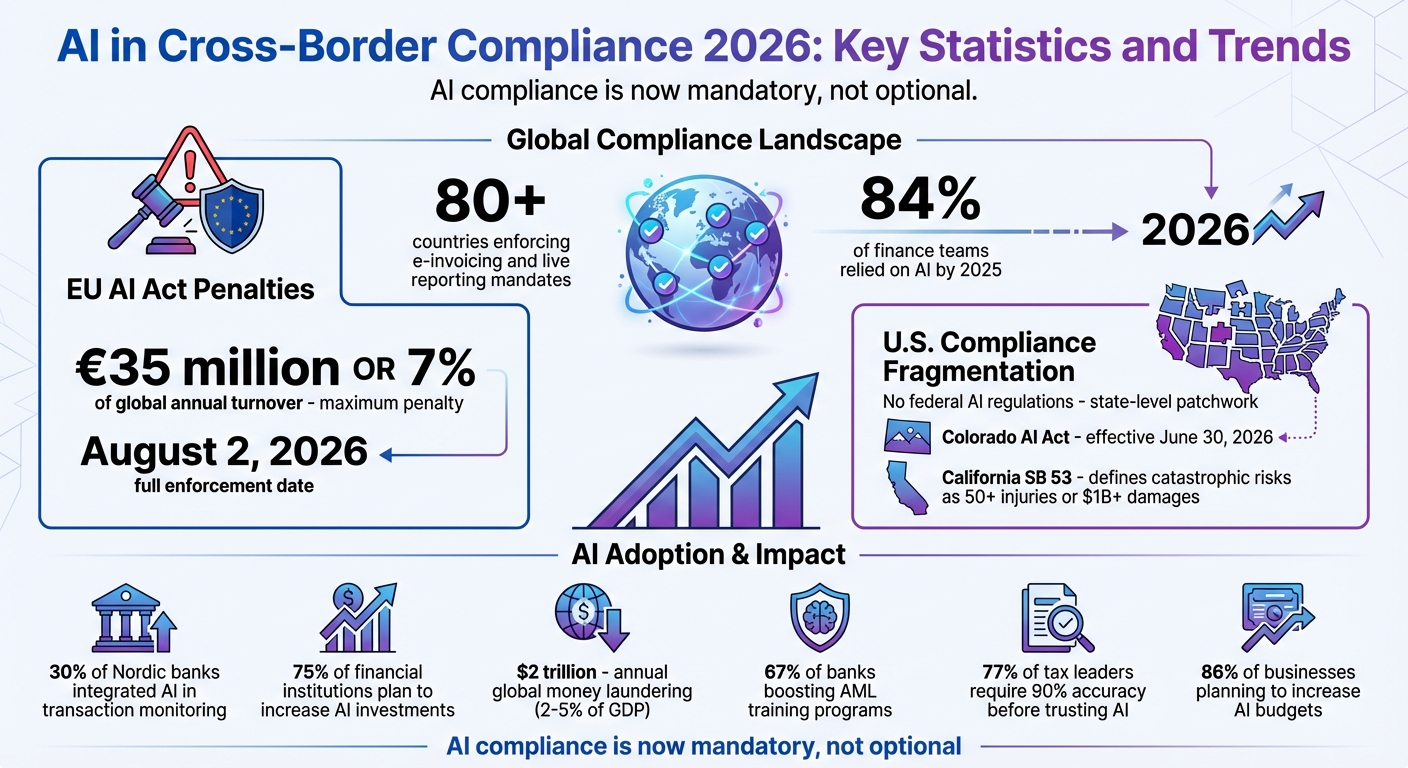
The EU regulates AI systems the way it regulates medical devices, through risk classification and pre-market conformity requirements under the AI Act. The US, by contrast, has no comprehensive federal AI law and instead relies on sector-specific rules and enforcement actions after the fact, largely driven by the FTC's conduct-based approach to deceptive or unfair data practices. South Africa's POPIA sits closer to the EU model in spirit, a rights-based framework with a dedicated regulator, but without an AI-specific layer equivalent to the AI Act yet.
China's PIPL and why 'no transfer pathway' isn't realistic for SA SMEs
China's PIPL takes the hardest line of any major regime, requiring security assessments and in some cases government approval before personal data crosses its borders. That model isn't realistic or necessary for South African SMEs to copy, because it assumes a scale of government infrastructure and legal resourcing that doesn't exist here and isn't what POPIA asks for. The useful takeaway isn't "lock data inside South Africa entirely." It's that transfer pathways need to be deliberate and documented, not that transfers should be blocked outright.
A practical checklist for SA businesses running AI on WhatsApp or n8n
Questions to ask your BSP or AI vendor before you sign
Ask where data is processed and stored by default, whether a POPIA-aware DPA is available, what the retention period is on logs and API payloads, whether zero-retention endpoints exist, and what happens to data on a failed or timed-out request. That last question catches most vendors off guard, which tells you something.
What to log, what not to log, and where it should live
Log metadata (timestamps, status codes, workflow IDs) freely. Scrub or redact actual message content and PII from error logs before they leave South Africa, or route logging through a self-hosted instance so the data never crosses a border in the first place. If you need full payloads for debugging, store them in a South African-hosted system with an access-controlled retention window, not a third-party SaaS logging dashboard by default.
When to bring in a developer vs a lawyer vs both
Bring in a developer first to map the actual data flow, every API call, every log, every retry path. Bring in a lawyer once you know what's actually happening, so they can assess real transfers instead of a theoretical architecture diagram. For anything customer-facing and PII-heavy, do both before launch, not after a complaint. If you're choosing between vendors or builders for this work, how to choose a custom AI development partner in South Africa and the real decision framework for AI system architecture are worth reading before you sign anything.
Common questions
Is WhatsApp Business API POPIA compliant in South Africa? The API itself is a platform, not a compliance status. WhatsApp Business API can be used in a POPIA compliant way if you control how data flows through it, including Local Storage settings, logging, and what gets sent to third-party AI tools. Out of the box, with no additional architecture, it is not automatically compliant.
Does using an international cloud AI provider create compliance obligations even for a small business? Yes. POPIA's Section 72 applies regardless of company size. A five-person business sending customer messages to an overseas LLM has the same cross-border transfer obligations as a large enterprise. Scale affects risk exposure and enforcement priority, not the legal requirement itself.
What does POPIA actually require for AI systems specifically? POPIA doesn't mention AI directly, but its general principles, lawful processing, purpose limitation, security safeguards, and Section 72's cross-border rules, apply fully to AI systems. See what POPIA actually requires for AI systems in 2026 for how these general principles map onto specific AI architecture decisions.
Who enforces cross-border data transfer rules in South Africa? The Information Regulator, a statutory body established under POPIA, enforces these rules. It can investigate complaints, issue enforcement notices, and levy administrative fines. Its action against WhatsApp shows it's willing to pursue even large multinational platforms, not just small local businesses.
What happens if an AI tool sends a prompt containing personal data to a provider in another country? That prompt is a cross-border transfer under Section 72 the moment it leaves South Africa. It needs to fall under a lawful basis, typically a data processing agreement with adequate protections or documented consent. Without one, the transfer is likely non-compliant regardless of how useful the AI output was.
Can you use ChatGPT, Claude, or other overseas LLMs on customer data and stay POPIA compliant? Yes, but only with the right controls: a data processing agreement, minimised and necessary data in prompts, documented retention settings, and ideally zero-retention API tiers where available. Using these tools with no agreement and full customer PII in every prompt is the pattern that creates real exposure.
What's the difference between data residency and data sovereignty for AI agents? Data residency refers to where data is physically stored. Data sovereignty refers to whose laws govern that data regardless of location. An AI agent can have SA data residency but still be subject to foreign subpoena or access laws if the processor is a foreign-owned company, which is why sovereignty matters more than residency alone.
Does Meta's Local Storage feature make WhatsApp automation automatically POPIA compliant? No. Local Storage keeps WhatsApp message content within your chosen region, which reduces one transfer risk, but it doesn't control what happens once that data enters your AI workflow. If your n8n pipeline then sends that same data to an overseas LLM or logs it to a foreign server, you've recreated the transfer Local Storage was meant to prevent.
If you're trying to work out whether your own setup, or an agency's build, actually holds up, whether an AI automation agency's build is actually POPIA compliant and keeping a pipeline running when a provider fails are both worth a look before you assume the answer is yes. And if you're starting from scratch, WhatsApp automation built for South African compliance requirements is the approach we take with every client, mapping the full data flow before a single node goes live.
If you want a second pair of eyes on your workflow before it becomes a compliance problem, message us on WhatsApp and we'll talk through what you've actually got running.
Common questions
Is WhatsApp Business API POPIA compliant in South Africa?
The API itself is a platform, not a compliance status. WhatsApp Business API can be used in a POPIA compliant way if you control data flow through it, including Local Storage settings, logging, and what gets sent to third-party AI tools. Out of the box, with no additional architecture, it is not automatically compliant.
Does using an international cloud AI provider create compliance obligations even for a small business?
Yes. POPIA's Section 72 applies regardless of company size. A five-person business sending customer messages to an overseas LLM has the same cross-border transfer obligations as a large enterprise. Scale affects risk exposure and enforcement priority, not the legal requirement itself.
What does POPIA actually require for AI systems specifically?
POPIA doesn't mention AI directly, but its general principles, lawful processing, purpose limitation, security safeguards, and Section 72's cross-border rules apply fully to AI systems. These general principles map onto specific AI architecture decisions.
Who enforces cross-border data transfer rules in South Africa?
The Information Regulator, a statutory body established under POPIA, enforces these rules. It can investigate complaints, issue enforcement notices, and levy administrative fines. Its action against WhatsApp shows it pursues even large multinational platforms.
What happens if an AI tool sends a prompt containing personal data to a provider in another country?
That prompt is a cross-border transfer under Section 72 the moment it leaves South Africa. It needs to fall under a lawful basis, typically a data processing agreement with adequate protections or documented consent. Without one, the transfer is likely non-compliant.
Can you use ChatGPT, Claude, or other overseas LLMs on customer data and stay POPIA compliant?
Yes, but only with the right controls: a data processing agreement, minimised and necessary data in prompts, documented retention settings, and ideally zero-retention API tiers. Using these tools with no agreement and full customer PII in every prompt creates real exposure.
What's the difference between data residency and data sovereignty for AI agents?
Data residency refers to where data is physically stored. Data sovereignty refers to whose laws govern that data regardless of location. An AI agent can have SA data residency but still be subject to foreign subpoena if the processor is foreign-owned, which is why sovereignty matters more than residency alone.
Does Meta's Local Storage feature make WhatsApp automation automatically POPIA compliant?
No. Local Storage keeps WhatsApp message content within your chosen region, which reduces one transfer risk, but it doesn't control what happens once that data enters your AI workflow. If your n8n pipeline sends that data to an overseas LLM or logs it to a foreign server, you've recreated the transfer.
About Sagentics
Sagentics is an AI systems studio based in South Africa. We design and build WhatsApp automation, n8n workflows, and custom AI products for local and international clients. We write from systems we have actually shipped.
Start a WhatsApp conversation with SagenticsRelated reading
- Designing AI human oversight: the checkpoints that actually work
- AI system design implementation: what it actually means and why most projects skip it
- AI process mapping: what it is, what it isn't, and whether it's worth paying for
- How to select an AI model for a task
- what actually needs to be true for WhatsApp automation to be POPIA compliant
- what POPIA actually requires for AI systems in 2026
- how WhatsApp data actually flows into an n8n workflow
- self-hosting n8n instead of using a cloud instance
- proper error handling so workflows don't leak data silently
- keeping a pipeline running when a provider fails
- the real decision framework for AI system architecture
- how to choose a custom AI development partner in South Africa
- whether an AI automation agency's build is actually POPIA compliant
- WhatsApp automation built for South African compliance requirements