

 Start a conversation
Custom AI product and SaaS development
Total cost of ownership for custom AI: what you'll actually pay over two years
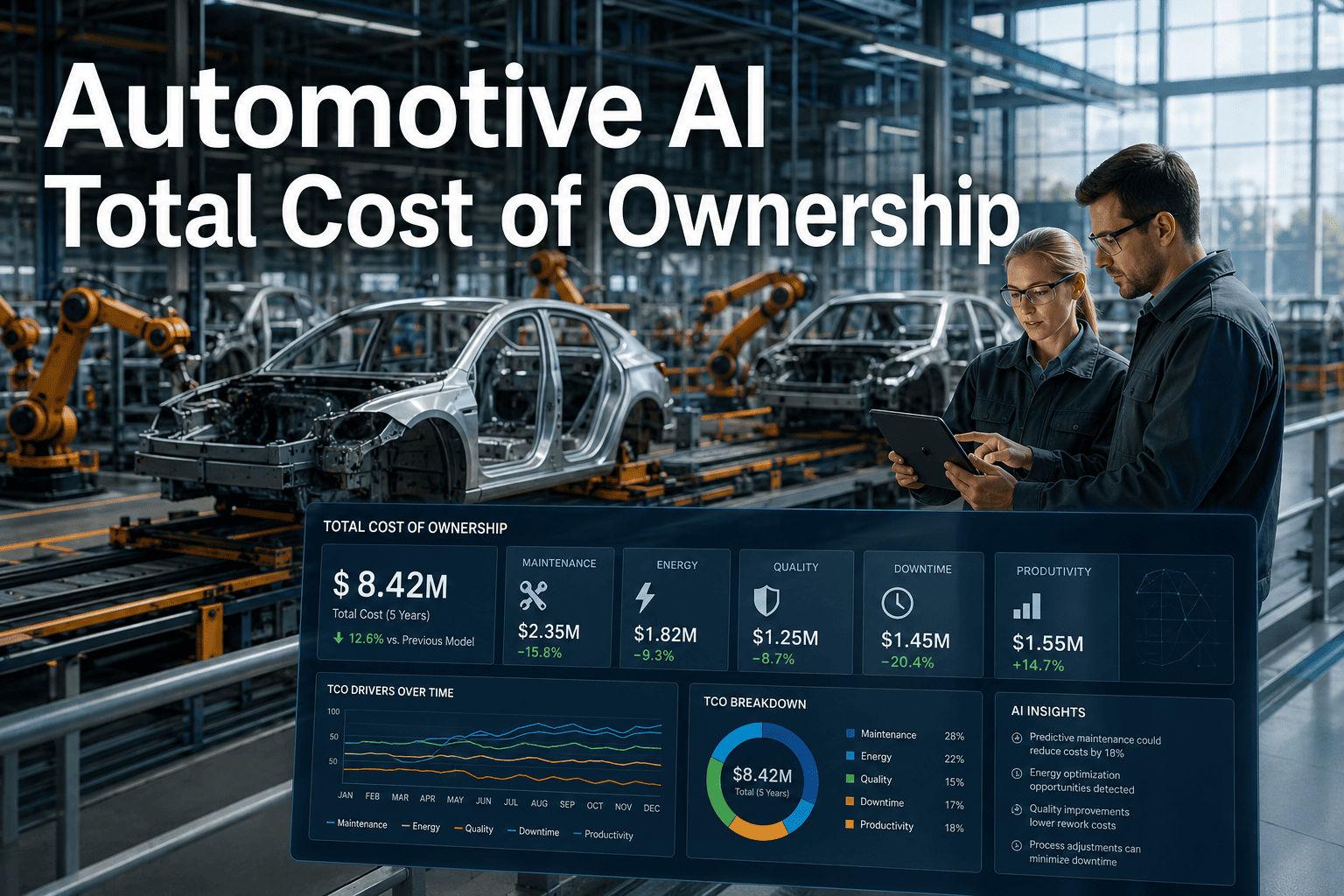
Total cost of ownership for a custom AI build typically runs 1.5x to 2x your initial development quote over two years once you add hosting, maintenance, retraining, and integration work. A R250,000 build usually lands between R375,000 and R500,000 by year two. That gap is where most South African businesses get caught out, not in the upfront quote itself.
Most of that range comes from builds written entirely from scratch with a dedicated in-house engineering team carrying the system after launch. If you build on low-code infrastructure like n8n and wire into systems you already own, the real multiplier drops to 1.3x to 1.6x over two years, because there's no bespoke codebase to maintain and no specialist required to keep it running.
What total cost of ownership actually means for custom AI
TCO is every rand you spend on a system from the day you sign the contract to the day you either retire it or replace it. That includes the build, but also hosting, monitoring, fixes, retraining, integration work, compliance, and whatever it costs you to leave if the relationship sours. Most quotes only cover the first item.
The multiplier everyone quotes and where the range comes from
The 1.6x to 2.2x multiplier that shows up in most AI cost breakdowns assumes two things: a bespoke codebase written from zero, and an in-house engineering team carrying the system after launch. Both of those assumptions inflate cost. A from-scratch build means every integration, every retraining cycle, and every bug fix requires custom engineering hours billed at full rate. A dedicated team means salary overhead whether the system needs attention that month or not.
We build on n8n and wire directly into infrastructure clients already own, rather than writing proprietary code from the ground up. There's no separate engineering team to carry between projects and no custom framework anyone needs retraining on six months later. For most of our South African builds, the real multiplier lands closer to 1.3x to 1.6x over two years. That's not a marketing number, it's what happens when the build itself is lighter and the maintenance load doesn't require a specialist who understands a bespoke codebase.
Why token price or a per-seat SaaS quote is not unit economics
A per-message token cost or a per-seat SaaS fee looks cheap in isolation, but it isn't unit economics until you multiply it by your actual volume and add the integration work needed to make it talk to your CRM, your invoicing system, and your WhatsApp line. SaaS pricing hides scaling costs the same way custom builds hide maintenance costs. Neither number on its own tells you what you'll spend in year two.
The build quote is roughly a third of what you'll actually spend
If your build quote is R250,000, budget for total two-year spend somewhere between R325,000 and R400,000 under our model, or up to R500,000 under the from-scratch industry standard. The build is the visible third of the iceberg. Hosting, fixes, and integration work make up the rest, and no vendor leads with that number because it doesn't help them close the deal.
The five cost layers hidden below the initial quote
Every custom AI project carries five cost categories beyond the build itself. Miss one of these in your budgeting and you'll be having an awkward conversation with your finance team six months after launch.
Hosting and infrastructure that scales with usage
Server costs, API calls to language models, and storage all scale with how much your system gets used. A WhatsApp bot handling 500 conversations a month costs a fraction of one handling 5,000. Budget infrastructure as a variable cost tied to volume, not a fixed line item, and revisit it quarterly as usage grows.
Maintenance, monitoring, and retraining
Systems break when APIs change, when WhatsApp updates its business platform, or when your product catalogue shifts and the AI starts giving outdated answers. Monitoring catches this before customers do. Retraining or reconfiguring prompts and workflows to reflect new information is an ongoing cost, not a one-time setup fee.
Integration with legacy systems and existing tools
Most South African businesses aren't starting from a blank slate. You've got an accounting package, a booking system, maybe a legacy CRM nobody wants to touch. Every integration point is engineering time, and every legacy system that wasn't built with an API in mind adds cost that a clean-slate SaaS tool simply doesn't carry.
POPIA compliance, security, and data handling
If your AI system touches customer data, and almost all of them do, POPIA applies. That means data handling agreements, secure storage, access controls, and a clear record of what data goes where and why. This isn't a one-time compliance checkbox, it's an ongoing responsibility that needs review as the system changes. Understanding what POPIA compliance actually requires before you build saves you from retrofitting compliance into a system that wasn't designed for it. Read our breakdown of POPIA compliance for WhatsApp automation for the detail.
Vendor lock-in and the cost of leaving
The cheapest part of any AI relationship is signing up. The expensive part is leaving, if your vendor built the system on a proprietary framework that only they understand, or if your data lives in a format only their platform can export cleanly. Ask about this before you sign, not after you've decided to leave.
Custom AI TCO in South African rand
Numbers matter more than percentages, so here's what this looks like in actual ZAR terms for South African businesses.
Typical build cost ranges by project size in ZAR
A simple WhatsApp automation handling FAQs and basic bookings typically runs R40,000 to R90,000 to build. A mid-complexity system integrating with a CRM, payment processing, and multi-step workflows sits between R150,000 and R350,000. Larger custom AI products with multiple integrations and custom logic can run R400,000 upward. For detailed ZAR budgets by feature set and timeline, see our AI build budget breakdown for South Africa.
What annual maintenance actually costs once live
Under a from-scratch, in-house team model, annual maintenance often runs 20-25% of the original build cost. Under an n8n-based build wired into infrastructure you already own, that figure typically drops to 12-18%, because there's less bespoke code to maintain and fewer specialist hours required to keep it running. On a R250,000 build, that's the difference between R50,000-R62,500 a year and R30,000-R45,000 a year.
Where WhatsApp Business API, PayFast, and Yoco fees fit into ongoing cost
If your AI system sends WhatsApp messages, processes payments through PayFast, or reconciles Yoco transactions, those platform fees are ongoing operational costs separate from your AI vendor's maintenance fee. WhatsApp Business API conversation-based pricing scales with volume, and payment gateway fees are a percentage of transaction value. None of this shows up in a build quote, but all of it shows up on your monthly statement. For the full breakdown, see WhatsApp automation cost in ZAR.
Build vs SaaS vs customise: the real decision framework
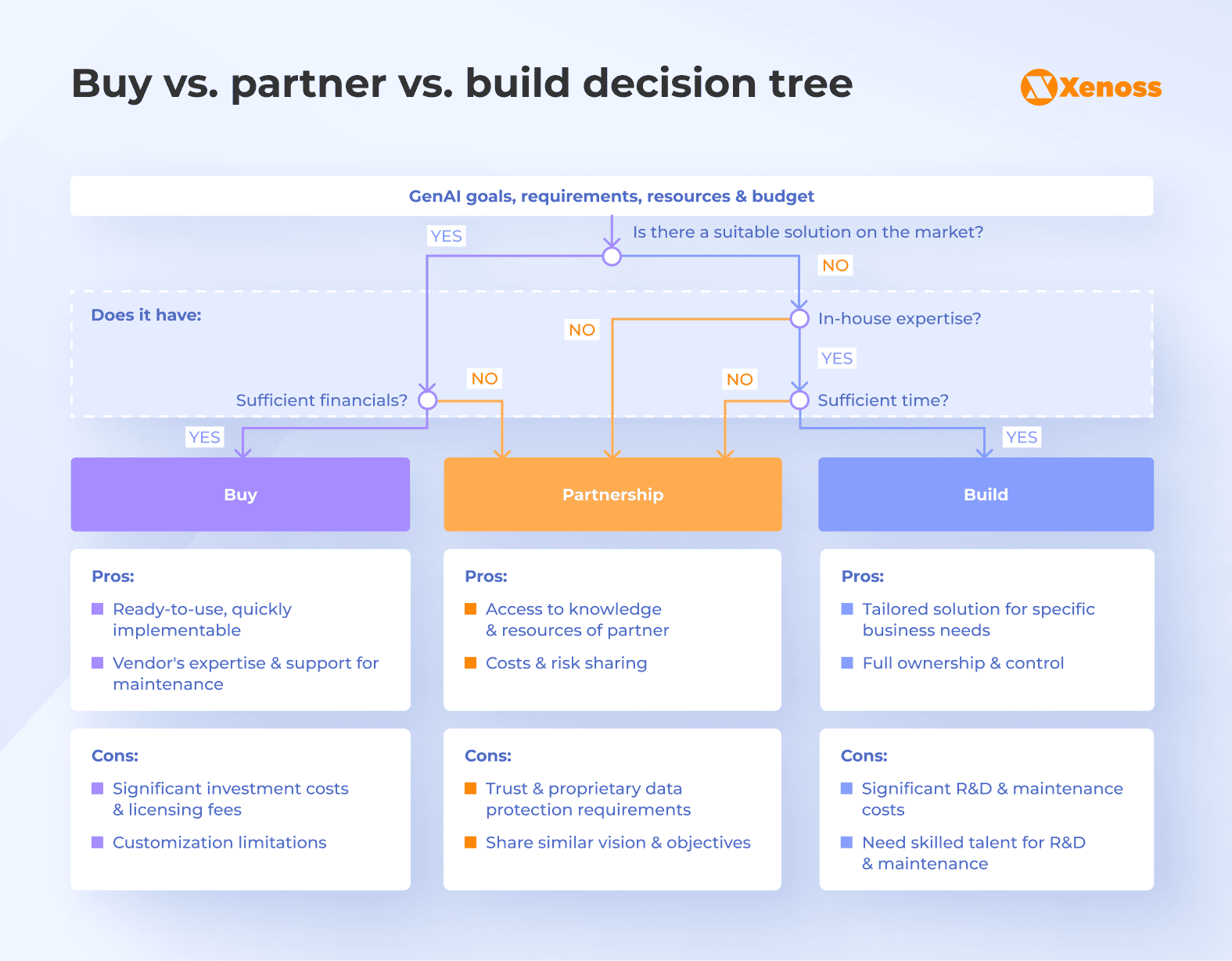
The build-or-buy decision comes down to volume, specificity, and how long you plan to run the system. There's no universally correct answer, only a correct answer for your numbers.
Volume thresholds where custom beats SaaS
Per-seat or per-conversation SaaS pricing scales linearly with usage. Custom builds have a higher upfront cost but a flatter ongoing cost curve. For most South African businesses, the crossover point sits somewhere between 500 and 1,500 monthly AI-handled conversations, depending on the SaaS tool's pricing tier. Below that volume, SaaS is usually cheaper. Above it, the fixed cost of a custom build starts winning.
When SaaS is still the cheaper, faster call
If you're testing a use case, running low volume, or need something live in a week rather than a month, SaaS wins. Don't build custom to solve a problem you haven't validated yet. Get a SaaS tool working, prove the volume and the value, then decide if custom makes sense.
In-house AI team cost vs an agency in South Africa
A single mid-level AI or automation engineer in South Africa costs R35,000 to R60,000 a month in salary alone, before benefits, tools, and management overhead. A functional in-house team of two to three people easily runs R1.2 million to R2 million a year. An agency relationship for the same output, especially one built on low-code infrastructure rather than bespoke engineering, typically costs a fraction of that because you're not carrying salary cost between projects, only paying for build and maintenance work as it happens.
How to budget for TCO before you sign a contract
The best time to ask about total cost of ownership is before you sign, not after the invoice for month eight arrives.
Questions to ask a vendor before the project starts
Ask what the system is built on and whether that framework is proprietary or portable. Ask what annual maintenance costs as a percentage of build cost, not just a flat "we'll be around if you need us." Ask what happens to your data and workflows if you leave. Ask how POPIA compliance is handled and who's responsible for it. If a vendor can't answer these clearly, that's information too.
A short TCO checklist you can use this week
Before signing anything, confirm: the build cost, the annual maintenance percentage, hosting cost at your expected volume, integration cost for your existing systems, POPIA compliance responsibility, and exit terms if you want to leave. Six numbers, six answers, and you have a real TCO estimate instead of a quote that only covers month one.
Common questions
How much does custom AI development cost in South Africa? Simple WhatsApp automations start around R40,000 to R90,000. Mid-complexity builds with CRM and payment integrations run R150,000 to R350,000. Larger custom products with multiple systems and custom logic can exceed R400,000. Actual cost depends on integration count, data complexity, and whether you're building on low-code infrastructure or from scratch.
What is the total cost of ownership of a custom AI or chatbot solution? TCO includes the build cost plus hosting, maintenance, retraining, integration, and compliance work over the system's life. Industry standard multipliers run 1.5x to 2x the build quote over two years. Builds on low-code infrastructure like n8n, without a dedicated in-house team, typically land closer to 1.3x to 1.6x.
Should I build or buy an AI system? Buy (SaaS) if you're testing a use case or running low volume and need speed. Build custom if you're above roughly 500-1,500 monthly interactions, need deep integration with existing systems, or plan to run the system for years. Volume and integration depth are the deciding factors, not preference.
What are the hidden costs of AI implementation? Hosting that scales with usage, ongoing maintenance and monitoring, retraining as your business changes, integration with legacy tools, POPIA compliance and data handling, and exit costs if you switch vendors. None of these typically appear in an initial build quote but all of them show up within the first year of running the system.
Is custom AI cheaper than SaaS at scale? Yes, above a certain volume threshold. SaaS pricing scales per seat or per conversation, so cost grows linearly with usage. Custom builds carry a higher upfront cost but a flatter ongoing curve, so at high volume the fixed cost of a custom system becomes cheaper than continuing to pay per-unit SaaS fees.
How much does an in-house AI team cost versus outsourcing to an agency? A single in-house AI engineer in South Africa costs R35,000 to R60,000 a month in salary alone. A working team of two to three easily runs R1.2 million to R2 million annually. An agency relationship, particularly one using low-code infrastructure, typically costs a fraction of that since you only pay for build and maintenance work as needed.
What's the ROI timeline for custom AI versus off-the-shelf tools? Off-the-shelf tools show ROI faster, often within weeks, because setup is quick and cost is low. Custom AI takes longer to pay back, typically 6 to 12 months, because the upfront build cost is higher. Beyond that window, custom systems often outperform SaaS on ROI since ongoing per-unit costs are lower.
How much does AI maintenance cost per year after launch? Under a from-scratch, in-house team model, expect 20-25% of build cost annually. Under a low-code build wired into existing infrastructure, that figure usually drops to 12-18%, since there's less bespoke code and fewer specialist hours required to keep the system running and updated.
At what volume does custom AI become cheaper than per-seat SaaS? Typically between 500 and 1,500 monthly AI-handled conversations or transactions, depending on the SaaS tool's specific pricing tier. Below that volume, per-seat or per-conversation SaaS pricing usually wins on cost. Above it, the fixed cost structure of a custom build starts outperforming linear SaaS pricing.
What happens to cost when you switch or leave an AI vendor? If the system was built on a proprietary framework, expect a partial rebuild, which can cost 40-70% of the original build price. If it was built on portable, standard infrastructure with exportable data, switching cost drops significantly. Ask about this before signing, not after deciding to leave.
Does POPIA compliance add to the cost of running a custom AI system? Yes, but it's ongoing rather than a one-time fee. Expect costs for secure data handling, access controls, and documentation of data flows. Building compliance in from the start is cheaper than retrofitting it later, and any vendor handling South African customer data should be able to explain their approach clearly.
If you want a straight answer on what your specific build would actually cost over two years, not just the launch quote, send us a message on WhatsApp and we'll walk through the numbers with you. You can also see our custom AI development work if you'd like to look at what we've built before you reach out.
Common questions
How much does custom AI development cost in South Africa?
Simple WhatsApp automations start around R40,000 to R90,000. Mid-complexity builds with CRM and payment integrations run R150,000 to R350,000. Larger custom products with multiple systems and custom logic can exceed R400,000. Actual cost depends on integration count, data complexity, and whether you're building on low-code infrastructure or from scratch.
What is the total cost of ownership of a custom AI or chatbot solution?
TCO includes the build cost plus hosting, maintenance, retraining, integration, and compliance work over the system's life. Industry standard multipliers run 1.5x to 2x the build quote over two years. Builds on low-code infrastructure like n8n, without a dedicated in-house team, typically land closer to 1.3x to 1.6x.
Should I build or buy an AI system?
Buy (SaaS) if you're testing a use case or running low volume and need speed. Build custom if you're above roughly 500-1,500 monthly interactions, need deep integration with existing systems, or plan to run the system for years. Volume and integration depth are the deciding factors, not preference.
What are the hidden costs of AI implementation?
Hosting that scales with usage, ongoing maintenance and monitoring, retraining as your business changes, integration with legacy tools, POPIA compliance and data handling, and exit costs if you switch vendors. None of these typically appear in an initial build quote but all of them show up within the first year of running the system.
Is custom AI cheaper than SaaS at scale?
Yes, above a certain volume threshold. SaaS pricing scales per seat or per conversation, so cost grows linearly with usage. Custom builds carry a higher upfront cost but a flatter ongoing curve, so at high volume the fixed cost of a custom system becomes cheaper than continuing to pay per-unit SaaS fees.
How much does an in-house AI team cost versus outsourcing to an agency?
A single in-house AI engineer in South Africa costs R35,000 to R60,000 a month in salary alone. A working team of two to three easily runs R1.2 million to R2 million annually. An agency relationship, particularly one using low-code infrastructure, typically costs a fraction of that since you only pay for build and maintenance work as needed.
What's the ROI timeline for custom AI versus off-the-shelf tools?
Off-the-shelf tools show ROI faster, often within weeks, because setup is quick and cost is low. Custom AI takes longer to pay back, typically 6 to 12 months, because the upfront build cost is higher. Beyond that window, custom systems often outperform SaaS on ROI since ongoing per-unit costs are lower.
How much does AI maintenance cost per year after launch?
Under a from-scratch, in-house team model, expect 20-25% of build cost annually. Under a low-code build wired into existing infrastructure, that figure usually drops to 12-18%, since there's less bespoke code and fewer specialist hours required to keep the system running and updated.
At what volume does custom AI become cheaper than per-seat SaaS?
Typically between 500 and 1,500 monthly AI-handled conversations or transactions, depending on the SaaS tool's specific pricing tier. Below that volume, per-seat or per-conversation SaaS pricing usually wins on cost. Above it, the fixed cost structure of a custom build starts outperforming linear SaaS pricing.
What happens to cost when you switch or leave an AI vendor?
If the system was built on a proprietary framework, expect a partial rebuild, which can cost 40-70% of the original build price. If it was built on portable, standard infrastructure with exportable data, switching cost drops significantly. Ask about this before signing, not after deciding to leave.
Does POPIA compliance add to the cost of running a custom AI system?
Yes, but it's ongoing rather than a one-time fee. Expect costs for secure data handling, access controls, and documentation of data flows. Building compliance in from the start is cheaper than retrofitting it later, and any vendor handling South African customer data should be able to explain their approach clearly.
About Sagentics
Sagentics is an AI systems studio based in South Africa. We design and build WhatsApp automation, n8n workflows, and custom AI products for local and international clients. We write from systems we have actually shipped.
Start a WhatsApp conversation with SagenticsRelated reading
- Build vs buy AI software: the honest answer for South African businesses
- Building a custom AI product: what it actually takes, what it costs, and why most of the work isn't the AI
- How to choose a real AI development partner in South Africa
- MVP scoping for AI SaaS: how to define the build before you pay for it
- custom AI development in South Africa
- the honest build vs buy answer
- what a custom AI build actually costs and takes
- a real ZAR budget range for AI builds
- what POPIA compliance actually requires
- whether n8n automations pay for themselves
- how to choose a real AI development partner
- WhatsApp automation cost in ZAR
- our custom AI development work