

 Start a conversation
Custom AI product and SaaS development
Compliance-first AI hiring products: what actually holds up under POPIA, NYC Local Law 144, and King V

A compliance-first AI hiring product prohibits fully automated hiring decisions at the architecture level, enforces human review before any candidate is accepted or rejected, and logs every decision in an audit trail accessible on request. Retrofit compliance—adding a disclaimer to a finished tool—fails the moment a regulator asks for logs or a candidate lodges a complaint. The systems that survive a POPIA investigation, a King V board review, or a discrimination lawsuit are built with that constraint from the first architecture decision, not added later as a UI feature.
If you're buying or building AI hiring software in South Africa right now, you're operating in a regulatory gap that looks quiet but isn't. POPIA Section 71 restricts automated decision-making and is the single most violated clause in every recruitment AI tool we've reviewed. King V, effective 2026, makes AI governance a board-level duty, not an IT checkbox. NYC Local Law 144 applies to any employer processing applications from New York residents, regardless of where your company is based. Illinois, Colorado, and California all have their own disclosure or impact assessment rules. None of this is theoretical. It's the difference between a tool that works in a demo and one that survives a regulator's letter.
What compliance-first actually means in an AI hiring product
The difference between bias audited and compliant by design
A bias audit tells you whether a model's outputs show disparate impact across demographic groups at a point in time. It's a snapshot. Compliance by design is a different thing entirely: it's the architecture ensuring that no matter what the audit finds, the AI never makes an unreviewable decision about a real person's employment. You can pass a bias audit and still violate POPIA. You can have a clean audit report and still lose a wrongful hiring complaint because there was no human accountable for the final call.
Why human review has to be architecture, not a feature flag
Most vendors bolt on a "human review" toggle that a busy recruiter clicks through without reading. That's not human-in-the-loop, that's a checkbox with a legal disclaimer attached. Real human review means the system produces a ranked shortlist with reasoning, routes it to a named person, logs their decision and their override rate, and makes that log retrievable if a complaint is filed. If your architecture can technically ship a hiring decision without a human touching it, you don't have a compliance-first product, you have a liability generator with a UI. We've seen this built wrong more times than right: a system that offers a one-click "approve all" button, or an auto-advance path for top candidates. That's not architecture, that's a trap.
What regulators and King V actually check for
Regulators and auditors don't ask to see your marketing page. They ask for logs: who made the final decision, what data the model used, whether a candidate could request an explanation, and whether the system could be disabled or overridden. King V explicitly frames this as a governance duty, meaning boards have to demonstrate oversight of AI systems used in decisions affecting people, not just IT sign-off. If your system can't produce an audit trail on request, it fails the only test that matters.
Where the legal risk actually sits: employer, not vendor
Why a vendor's compliance claim doesn't transfer your liability
Buying software labelled "POPIA compliant" does not make your use of it compliant. Under POPIA, the employer is typically the responsible party, meaning you carry accountability for how personal information is processed, even when a third-party tool does the processing. A vendor's marketing claim is not a legal shield. If a candidate lodges a complaint with the Information Regulator, they name the employer, not the software company.
The Workday litigation and what it means for vendor due diligence
The ongoing US litigation against Workday, where its AI screening tool is accused of discriminating against candidates over 40, is instructive precisely because employers using the tool are named alongside the vendor. Courts are treating AEDT vendors as potential joint actors in discrimination claims, not neutral tool providers. The lesson for South African employers and vendors alike: due diligence on an AI hiring vendor now needs to look more like due diligence on a business partner than a software procurement checklist. If a vendor can't show you how the tool enforces human review and generates audit logs, treat that as a disqualifying gap, not a future roadmap item.
Small businesses carry the same exposure as large employers
There is no small-business carve-out in POPIA or in most AEDT-style laws. A 15-person recruitment agency using an off-the-shelf AI screener carries the same Section 71 exposure as a JSE-listed company running the same tool at scale. The difference is resources to defend a complaint, not exposure to one. If anything, smaller employers are more attractive complaint targets because they're less likely to have documented governance in place.
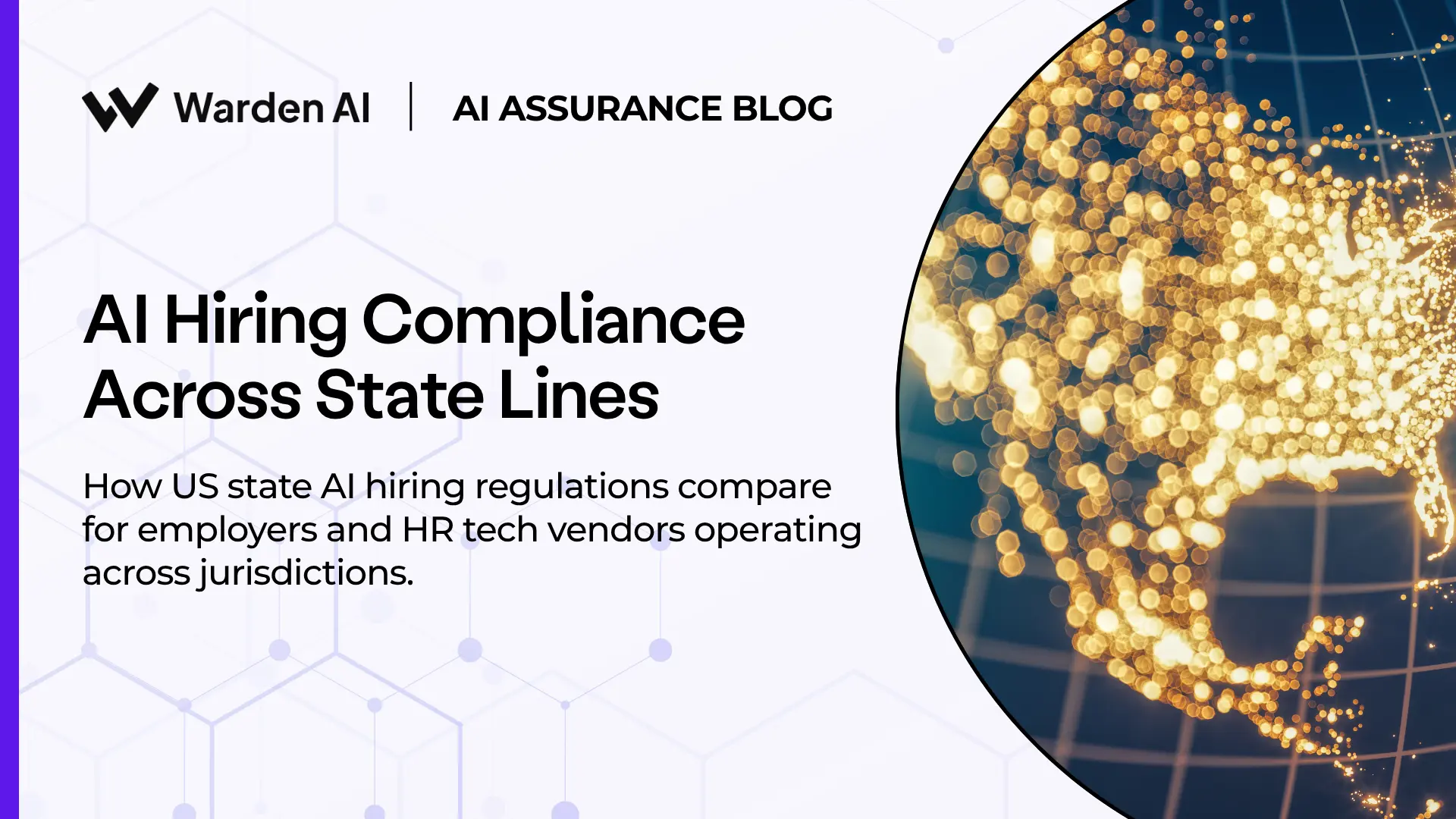
The regulatory patchwork, mapped honestly
NYC Local Law 144: the only law that names a bias audit
Local Law 144 is the most specific rule in this space. It requires employers using an "automated employment decision tool" on NYC-based candidates to commission an independent bias audit within the prior year, publish a summary, and notify candidates the tool is in use. It's narrow in geography but broad in effect, because any company processing applications from NYC residents can trigger it, regardless of where the company itself is based. The New York City Comptroller's office audited compliance and found a 17-to-1 discrepancy: for every employer appearing to use these tools, only a small fraction filed the required audit summary. Enforcement has been thin so far, but that gap is exactly the kind of finding that precedes a stricter enforcement wave.
Illinois, Colorado, California, EU AI Act: liability without a named audit
Outside New York, the picture is murkier but not safer. Illinois and Colorado have AI hiring disclosure and impact assessment requirements without a mandated third-party audit. California's regulations are tightening around automated decision-making in employment. The EU AI Act classifies employment-related AI as high-risk, triggering conformity assessments and documentation duties. None of these copy NYC's audit model exactly, but all of them create liability if you can't show you assessed and mitigated bias. Absence of a named audit requirement is not absence of risk.
POPIA Section 71: why AI can shortlist but can't decide
Section 71 of POPIA prohibits subjecting a data subject to a decision based solely on automated processing, including profiling, if that decision has a legal or similarly significant effect on them and there's no human intervention. Hiring and rejection decisions clearly qualify. This is why an AI system in South Africa can score, rank, and generate a shortlist with reasoning, but the final accept or reject call has to be made and logged by a human. This is exactly the architecture we cover in AI candidate assessment in executive search: what actually works in South Africa, and it's the single most misunderstood clause in every "POPIA compliant" recruitment tool we've reviewed.
King V 2026: AI governance as a board-level duty in South Africa
King V moves AI governance from an IT policy question to a board accountability question. Boards will need to show they understand how AI is used in decisions affecting employees and candidates, that risk has been assessed, and that oversight mechanisms exist. For any company using AI in hiring, that means the board, not just HR or IT, needs a documented answer to "how do we know this system isn't making unreviewable decisions about people."
Why weak enforcement today is not a reason to defer compliance
Weak enforcement is not low risk. Regulators build enforcement capacity over time, and the compliance gaps identified in the Comptroller's review are exactly the kind of findings that precede stricter enforcement. The companies caught in the first wave of real enforcement will be the ones that assumed a quiet regulator meant a safe regulator. Building compliance now, while enforcement is soft, is cheaper than retrofitting it after a complaint or a regulatory sweep names your company.

What South African hiring tools get wrong about POPIA today
Marketing POPIA compliant without addressing Section 71
This is the gap we see constantly. Vendor landing pages say "POPIA compliant" next to a padlock icon, but the product documentation never mentions Section 71, automated decision-making, or how a candidate would exercise their right to object to a fully automated outcome. Compliance claims that don't name the specific clause they address are marketing, not architecture. If a vendor can't articulate Section 71 and how their tool enforces human review against it, they haven't solved the problem.
Cross-border data transfer risk on offshore-hosted AI platforms
Many AI hiring tools sold into South Africa run on infrastructure hosted in the US or EU, processing CVs and assessment data that includes special personal information. POPIA's cross-border transfer rules require that the receiving country has adequate protection or that specific safeguards are in place. Vendors rarely disclose where inference actually happens, which means buyers often don't know they've created a cross-border transfer problem until it's flagged in an audit or complaint. If a vendor won't tell you whether inference runs on servers in South Africa or on AWS US-East, assume it runs offshore and ask for a data processing agreement that addresses adequacy or binding safeguards.
Responsible party vs operator: who actually carries accountability
POPIA distinguishes between a responsible party, who determines the purpose and means of processing, and an operator, who processes on their behalf. Most employers assume the AI vendor is the operator and therefore carries the compliance burden. In practice, if you're the one deciding to use the tool for hiring decisions, you're very likely the responsible party, and the operator agreement needs to reflect that clearly, in writing, with defined obligations. This is the same distinction that matters in how POPIA changes the build for a profile enrichment platform, where getting the responsible party role wrong created downstream liability nobody had budgeted for.
A vendor and build due diligence checklist
Questions to ask before buying an AI hiring tool
Ask exactly where the model runs and where data is stored. Specifically: Does inference happen on infrastructure in South Africa, or on cloud providers in the US or EU? If it's offshore, what data processing agreement is in place to handle POPIA cross-border transfer rules? Ask whether the tool can technically issue a final hiring decision without human sign-off, and if so, disable that path or walk away. Ask for the audit log format and whether it's exportable on request, in a format your legal team can read without the vendor's interpretation. Ask who is named in the operator agreement and what happens to candidate data on contract termination (deletion timeline and proof). Ask how candidates can request an explanation of their score or challenge the decision. If the sales team can't answer these without escalating to engineering, that's your answer.
What to specify before building one
If you're building rather than buying, specify the human checkpoint before you specify the model. Decide who makes the final call, what they see, and what gets logged, before a single line of scoring logic gets written. Specify data retention and deletion rules against POPIA's minimality principle. Decide upfront whether your system needs to support a candidate's right to request the reasoning behind their score, because retrofitting explainability is far harder than designing for it. Write the audit log schema before you write the candidate ranking logic. The log is your defence; the ranking is your product.
Contract clauses that actually matter: audit cooperation, data deletion, human override
Three clauses do the actual work. An audit cooperation clause obligates the vendor to support your business in the event of a POPIA complaint or regulatory audit, not just apologise if their model is found biased. A data deletion clause with a defined timeline and proof of deletion. And a human override clause that contractually guarantees the system cannot finalise a hiring decision without a logged human action. Everything else in a vendor contract is administrative. These three are the load-bearing clauses.
How Sagentics builds compliance into hiring AI from day one
Human-in-the-loop as a non-negotiable design constraint
Most South African recruitment AI vendors put "POPIA compliant" in their marketing without ever addressing Section 71, which prohibits fully automated decisions with legal or significant effect on a person. We treat that clause as the starting constraint, not an afterthought. Our systems are designed so the AI produces a ranked shortlist with visible reasoning, and a named human recruiter makes and logs the final call. Most vendors treat this as a UX nicety, something you can add later with a confirmation button. We treat it as the load-bearing wall of the architecture, because it's the only version of "compliant" that actually survives contact with a POPIA complaint or a King V board review.
What this looked like in our executive assessment build
For an executive search client, we built a candidate assessment system that scores CVs, interview transcripts, and reference checks against a documented competency framework, then generates a ranked shortlist with the reasoning behind each score. The system cannot advance a candidate to offer stage without a human recruiter reviewing the reasoning and logging their decision, including cases where they override the AI's ranking. That override log is itself a compliance asset. It shows a regulator, or a board under King V, that a human was accountable at the point where the decision had legal effect. You can read the detail in our executive candidate assessment case study. If you're weighing whether to build something similar or buy an off-the-shelf tool, the honest build vs buy answer for South African businesses and how custom AI development works in South Africa both cover the tradeoffs in more depth.
Common questions
Does my ATS or resume screener count as an AEDT even if I'm not based in NYC? Yes, if it's used to evaluate candidates who reside in NYC or apply for NYC-based roles, Local Law 144 can apply regardless of where your company is headquartered. Location of the employer doesn't determine coverage, location and residence of the candidate does. Check where your applicant pool actually lives before assuming the law doesn't reach you.
Do small businesses need to comply too, or is this just a big-company problem? Small businesses carry the same legal exposure as large employers under POPIA and most AEDT-style laws, because there's no small-business exemption written into these rules. The practical difference is resources to respond to a complaint, not exposure to one. Smaller employers are often easier complaint targets because they lack documented governance.
What happens if I just rely on my vendor's we're bias-tested claim? A vendor's bias-tested claim doesn't transfer your legal accountability under POPIA, where the employer is typically the responsible party. If a complaint arises, you'll be asked for your own documentation of oversight, not just the vendor's marketing material. Litigation like the Workday case shows employers get named alongside vendors, not shielded by them.
How much does a bias audit actually cost? Independent bias audits under Local Law 144 typically range from a few thousand to tens of thousands of US dollars, depending on the tool's complexity, the data available, and the auditor's scope. Costs scale with how many demographic categories are tested and how much historical outcome data exists. Budget for this annually if you use an AEDT on NYC-based candidates.
What's the actual penalty exposure under NYC Local Law 144? Violations carry civil penalties per violation, with each day of noncompliant use potentially counted separately, meaning fines can accumulate quickly for an employer using an unaudited tool continuously. Beyond direct penalties, there's reputational and litigation risk if a discrimination claim follows. The Comptroller's enforcement gap suggests fines are currently rare, but that's not a durable protection.
Can an AI system make the final hiring decision on its own under POPIA? No. Section 71 prohibits decisions based solely on automated processing, including profiling, where the decision has a legal or similarly significant effect on the person, unless specific exceptions apply with safeguards. In hiring, this means the AI can score and rank candidates, but a human must make and log the final accept or reject decision.
Who is legally responsible under POPIA when a recruitment agency or AI vendor is involved? Whoever determines the purpose and means of processing is the responsible party, and that's usually the employer or recruitment agency making the hiring decision, not the AI vendor supplying the tool. The vendor is typically the operator, bound by a written agreement defining their obligations. Accountability doesn't automatically shift just because a third-party tool is used.
Are bias audits legally required outside NYC? Not in the same explicit, named-audit form. Illinois, Colorado, California, and the EU AI Act impose disclosure, assessment, or documentation duties on AI hiring tools without mandating a specific third-party bias audit like Local Law 144 does. That doesn't remove liability, it just means the compliance obligation looks different, usually built around impact assessments rather than a published audit report.
What does King V require of South African boards regarding AI in hiring? King V, effective 2026, treats AI governance as a board-level duty rather than an IT or HR matter. Boards need to demonstrate they understand how AI is used in decisions affecting employees and candidates, that risks like bias and data misuse have been assessed, and that oversight mechanisms, including human review, are documented and functioning.
If you're building or buying an AI hiring tool and want a straight answer on whether it would survive a POPIA complaint or a King V review, message us on WhatsApp and we'll walk through it.
Common questions
Does my ATS or resume screener count as an AEDT even if I'm not based in NYC?
Yes, if it's used to evaluate candidates who reside in NYC or apply for NYC-based roles, Local Law 144 applies regardless of where your company is headquartered. Location of the employer doesn't determine coverage; location and residence of the candidate does. Check where your applicant pool actually lives before assuming the law doesn't reach you.
Do small businesses need to comply too, or is this just a big-company problem?
Small businesses carry the same legal exposure as large employers under POPIA and most AEDT-style laws because there's no small-business exemption written into these rules. The practical difference is resources to respond to a complaint, not exposure to one. Smaller employers are often easier complaint targets because they lack documented governance.
What happens if I just rely on my vendor's we're bias-tested claim?
A vendor's bias-tested claim doesn't transfer your legal accountability under POPIA, where the employer is typically the responsible party. If a complaint arises, you'll be asked for your own documentation of oversight, not just the vendor's marketing material. Litigation like the Workday case shows employers get named alongside vendors, not shielded by them.
How much does a bias audit actually cost?
Independent bias audits under Local Law 144 typically range from a few thousand to tens of thousands of US dollars, depending on the tool's complexity, the data available, and the auditor's scope. Costs scale with how many demographic categories are tested and how much historical outcome data exists. Budget for this annually if you use an AEDT on NYC-based candidates.
What's the actual penalty exposure under NYC Local Law 144?
Violations carry civil penalties per violation, with each day of noncompliant use potentially counted separately, meaning fines can accumulate quickly for an employer using an unaudited tool continuously. Beyond direct penalties, there's reputational and litigation risk if a discrimination claim follows. The Comptroller's enforcement gap suggests fines are currently rare, but that's not a durable protection.
Can an AI system make the final hiring decision on its own under POPIA?
No. Section 71 prohibits decisions based solely on automated processing, including profiling, where the decision has a legal or similarly significant effect on the person, unless specific exceptions apply with safeguards. In hiring, this means the AI can score and rank candidates, but a human must make and log the final accept or reject decision.
Who is legally responsible under POPIA when a recruitment agency or AI vendor is involved?
Whoever determines the purpose and means of processing is the responsible party, and that's usually the employer or recruitment agency making the hiring decision, not the AI vendor supplying the tool. The vendor is typically the operator, bound by a written agreement defining their obligations. Accountability doesn't automatically shift just because a third-party tool is used.
Are bias audits legally required outside NYC?
Not in the same explicit, named-audit form. Illinois, Colorado, California, and the EU AI Act impose disclosure, assessment, or documentation duties on AI hiring tools without mandating a specific third-party bias audit like Local Law 144 does. That doesn't remove liability, it just means the compliance obligation looks different, usually built around impact assessments rather than a published audit report.
What does King V require of South African boards regarding AI in hiring?
King V, effective 2026, treats AI governance as a board-level duty rather than an IT or HR matter. Boards need to demonstrate they understand how AI is used in decisions affecting employees and candidates, that risks like bias and data misuse have been assessed, and that oversight mechanisms, including human review, are documented and functioning.
About Sagentics
Sagentics is an AI systems studio based in South Africa. We design and build WhatsApp automation, n8n workflows, and custom AI products for local and international clients. We write from systems we have actually shipped.
Start a WhatsApp conversation with SagenticsRelated reading
- Build vs buy AI software: the honest answer for South African businesses
- Building a custom AI product: what it actually takes, what it costs, and why most of the work isn't the AI
- How to choose a real AI development partner in South Africa
- MVP scoping for AI SaaS: how to define the build before you pay for it
- AI candidate assessment in executive search: what actually works in South Africa
- how POPIA changes the build for a profile enrichment platform
- what human-in-the-loop actually means in production AI
- what actually needs to be true for POPIA-compliant automation
- the honest build vs buy answer for South African businesses
- our executive candidate assessment case study
- how custom AI development works in South Africa