

 Start a conversation
Custom AI product and SaaS development
White label reporting tools for agencies: what to buy, what to build, and where the templates run out
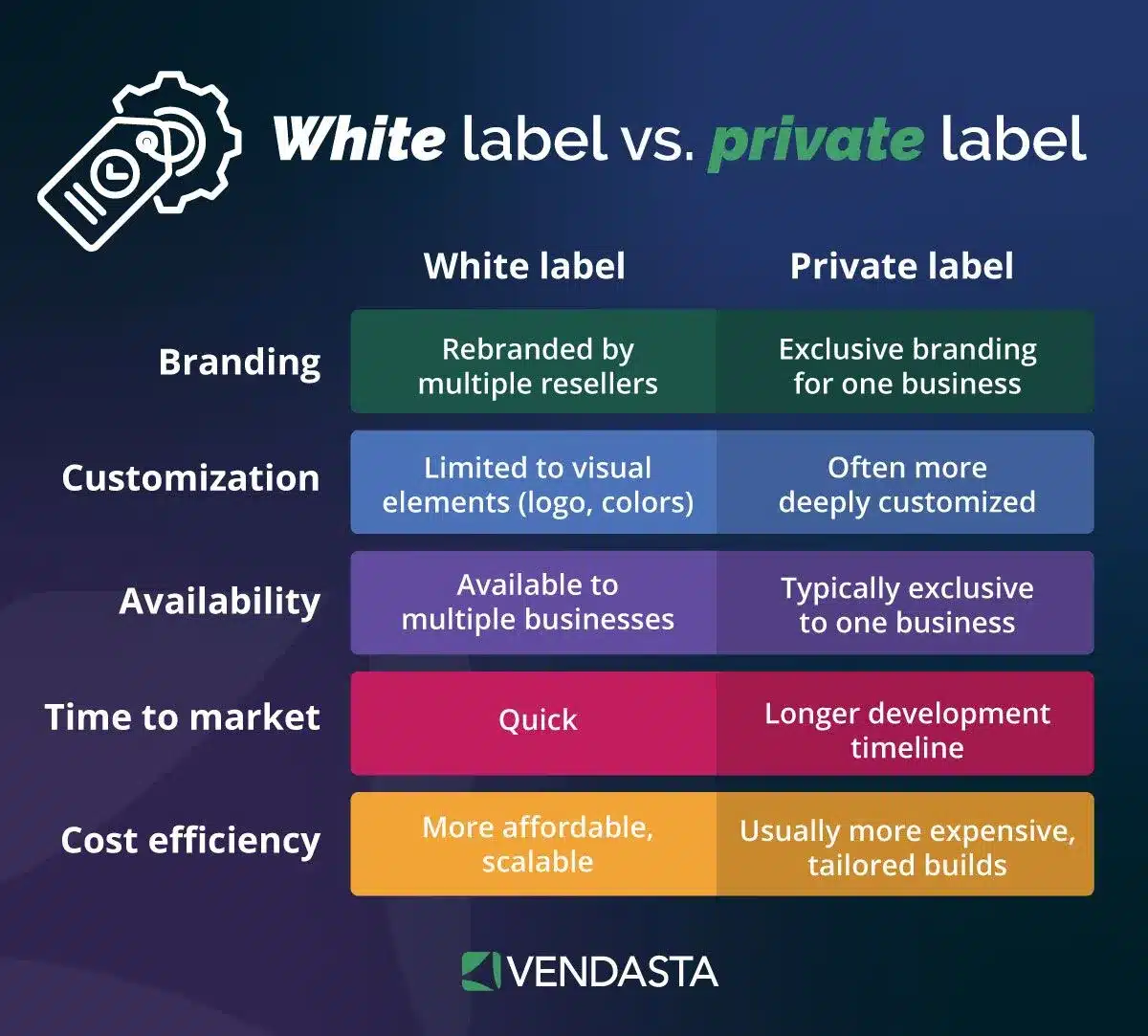
Buy a white label reporting tool if all your clients run standard platforms like Google Ads, Meta, and GA4. Build a custom pipeline if you're manually uploading CSV data every month for more than one client, because that's the point where you've hit the ceiling every templated tool has.
White label reporting tools are platforms like AgencyAnalytics, Swydo, and DashThis that pull client marketing data into dashboards and PDF reports branded entirely under your agency's name, with no vendor logo anywhere in sight. We say this having built reporting systems from the ground up for agency and media clients, not just resold someone else's dashboard. The pattern is consistent: white label tools work fine until a client runs a data source the templates don't cover. At that point agencies either force-fit the data into a chart that doesn't quite tell the truth, or they quietly go back to manual exports and screenshots for that one client. Nobody talks about this in the vendor comparison articles, so we're going to.
What a white label reporting tool actually does
A white label reporting tool connects to your clients' marketing platforms (Google Ads, Meta, Google Analytics, email tools, CRMs), pulls the numbers on a schedule, and presents them in dashboards or PDF reports carrying your agency's branding instead of the vendor's. The client never sees "AgencyAnalytics" or "Swydo" anywhere. They see your logo, your colours, your report.
Branded dashboards vs branded PDF reports
These are two different products even when sold by the same vendor. A branded dashboard is a live, always-on view a client can log into and check whenever they want. A branded PDF report is a static document generated on a schedule, usually monthly, and emailed or shared. Some clients want the dashboard because they check in weekly. Others just want the PDF in their inbox on the first of the month and nothing more. Most agencies end up offering both because different clients within the same agency want different things, and the tool needs to support that split without extra manual work.
Where the data comes from (APIs, connectors, manual uploads)
Data enters these platforms three ways: native API connectors (the vendor has built a direct integration with, say, Google Ads), third-party connector marketplaces (usually through Zapier or a similar layer), or manual CSV upload when no connector exists. The manual upload option is where the cracks start showing. If your client runs a niche ad platform, a local South African payment processor like Yoco or PayFast with no reporting API, or an internal CRM with no public connector, you're uploading spreadsheets by hand every month. That's not automation, that's just a nicer-looking manual process. From a POPIA compliance angle, you're also moving client data in and out of systems manually, which creates audit friction you wouldn't have with a direct API connection.
Why full vendor invisibility matters more than logo swapping
Real white labelling isn't just swapping a logo. It's custom domains, removed "powered by" footers, branded login pages, and client-facing support that never mentions the underlying platform. Some vendors gate full invisibility behind their top pricing tier, so an agency on a starter plan might still be paying for "white label" reporting while the tool quietly shows its own branding in an email footer or a password reset link. Check this before you sign, not after your client notices.
Features that actually matter when you're evaluating one
The vendor comparison pages all list similar feature checkboxes. Here's what actually changes your day-to-day.
Multi-source integrations and how many platforms your clients really run
Count the distinct platforms across your actual client roster, not the ones a vendor's marketing page assumes you use. An agency running only Google Ads and Meta for every client barely needs to think about this. An agency with one client on TikTok Ads, another running a niche South African e-commerce platform on Shopify with custom analytics, and a third pulling data from a custom CRM will find that "200+ integrations" marketing claim means almost nothing if the three integrations you need aren't in the list.
Automated scheduling vs manual export triggers
Scheduling should mean the report generates and sends itself on a set date with zero human involvement. Some platforms market "automated" reporting that still requires someone to log in and click "generate" each month. That's not automation, that's a shortcut. Ask specifically whether reports can be scheduled to send with no manual trigger, and whether that's available on your pricing tier.
White label branding included on the base plan or gated behind enterprise
As mentioned above, full white labelling is sometimes an add-on or an enterprise-only feature. If you're comparing monthly prices across vendors, make sure you're comparing prices at the tier where you actually get full branding removal, not the cheapest advertised tier.
Permission controls for client and team access
If you have account managers who should only see their own clients, or clients who should see their dashboard but not edit anything, granular permissions matter more than they seem to at signup. Agencies growing past five or six team members usually discover permission gaps the hard way, usually when a client sees another client's data by accident. POPIA requires documented access controls, so this is compliance, not just convenience.
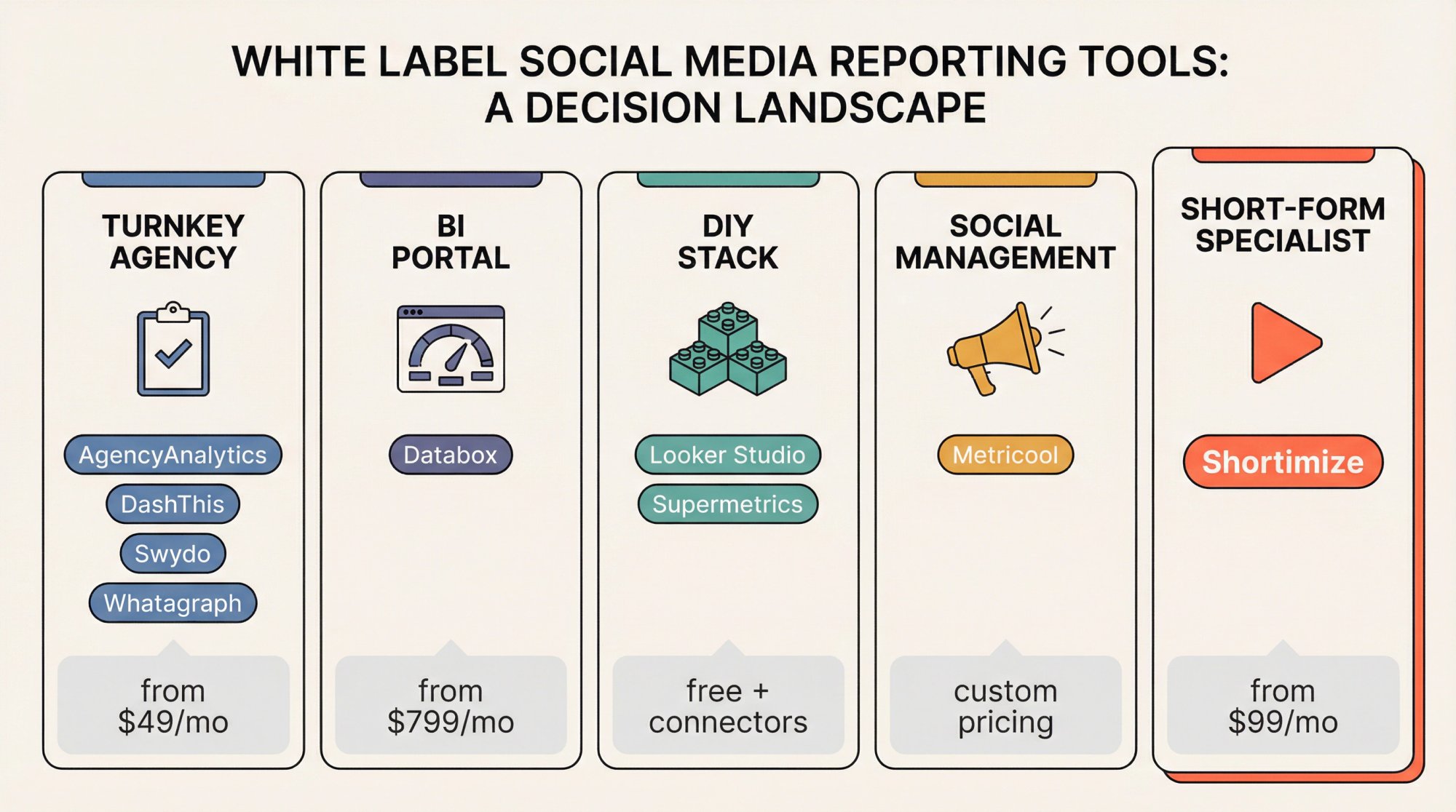
What these tools cost in 2026
Pricing across this category falls into three models, and the model matters more than the headline number.
Per-client vs per-seat vs monthly active user pricing
Per-client pricing charges you for each client account you manage, regardless of team size. Per-seat pricing charges per team member with a login, regardless of client count. A newer model charges by monthly active client logins, which sounds fair until a client who checks their dashboard daily costs you more than one who never logs in. Know which model you're being billed under before you scale client count or team size, because the wrong model at scale can quietly double your bill.
Typical ranges converted to ZAR context
Most white label reporting tools price in USD, typically landing between $80 and $400 a month for small to mid-sized agencies. At current exchange rates (roughly 17-18 ZAR to USD), that's approximately R1,350 to R7,200 a month before VAT. An agency managing 20 clients on per-client pricing at $12 per client (a typical entry-level price) would pay around $240 monthly, or roughly R4,300, plus support add-ons that often push this to R6,000 or higher. Agencies paying in USD also absorb currency fluctuation risk: a rand weakness of 10% moves your monthly cost up by R600-700 even if the vendor never raises their USD price.
Where the hidden costs show up as your client count grows
The advertised starting price rarely reflects what you'll pay once you're managing 15 or 20 clients. Per-client pricing scales linearly with your growth, which sounds fine until you realise your reporting tool cost is now growing at the same rate as your revenue instead of shrinking as a percentage of it. That's the opposite of what a scaling tool should do. A per-seat model avoids this if your team stays flat, but hiring account managers to handle that client growth often means your per-seat costs climb too.
The honest setup time question
Why vendor claims range from 10 minutes to a full day
Vendor landing pages love the "set up your first report in 10 minutes" claim. That's true if you mean connecting one API and generating a default template. It's not true if you mean producing a report that actually looks like something your agency would put its name on.
What actually takes time: template building, not account creation
Account creation and API connection genuinely take minutes. The real time cost is building report templates that match your agency's brand, restructuring default widgets so they answer the questions your specific client cares about, and writing the narrative sections that turn raw numbers into something a client can act on. That work takes hours per client, not minutes, especially the first time. For a client running paid social and search together, expect 3-4 hours to get a polished first report out the door.
How long it really takes once you factor in client-specific data sources
For a client running standard platforms (Google, Meta, GA4), expect half a day to get a polished first report out. For a client with a niche or unsupported data source, expect that half day to stretch into several days of manual CSV wrangling, connector workarounds, or accepting that one section of the report will always need a manual update. This is usually the first sign an agency is approaching the ceiling these tools have. We've seen agencies spend 2-3 days building a report for a client running a custom WhatsApp Business API lead capture system alongside paid ads, only to discover the WhatsApp data has to be manually exported and spliced in every month.

When a white label tool stops being enough
The ceiling: clients with data sources the templates don't support
Every agency using these tools eventually gets a client running something the vendor doesn't connect to. A local payment gateway like Yoco or Paystack, an internal booking system, a custom-built CRM, a WhatsApp Business API integration used for lead capture. When that happens, the templated tool has no answer beyond "upload a CSV manually." For South African agencies, this often happens faster than expected because many local businesses run bespoke systems that don't have public APIs.
Agencies stitching together screenshots and Slack threads at month end
This is the quiet failure mode nobody puts in a case study. The dashboard looks great for 80% of the report. The other 20% is a team member copying numbers from a platform export into a spreadsheet, screenshotting a chart from somewhere else, and pasting it into the PDF by hand every single month. It works, but it doesn't scale, and it's the exact manual work the tool was bought to eliminate. We've watched agencies do this for 6-12 months before admitting the tool isn't solving the problem.
The build vs buy decision point
Once you're manually patching more than one section of more than one client's report every month, you've hit the point where a subscription stops being the cheaper option. This is where the honest build vs buy decision actually needs to happen, ideally before you've spent a year paying for a tool that only half works for your hardest clients. Most agencies at this point have already spent R15,000-20,000 in subscriptions without solving the real problem.
What we've seen building reporting systems for agencies
Why some agencies end up automating the pipeline instead of buying a dashboard
The agencies that solve this properly don't switch to a "better" white label vendor. They stop treating reporting as a dashboard problem and start treating it as a data pipeline problem. Instead of asking "which platform has the most integrations," they build a pipeline that pulls from whatever source a client actually uses, whether that's a supported API, a webhook, an FTP export, or a system with no public connector at all, and only worry about branding at the final output stage. That's exactly what we built with a social reporting platform we created for a Cape Town-based agency, where the client's mix of Paid Social, Google Ads, and custom CRM data didn't fit any off-the-shelf template.
Where AI-written narrative summaries fit into a reporting workflow
The other gap templated tools leave is the narrative. A chart showing spend and conversions doesn't tell a client what happened or why it matters. We've added an AI narrative layer with Claude in n8n to pipelines so that every report includes a written summary generated from the actual numbers, not a generic template sentence. This is the piece most white label tools either skip entirely or handle badly with fill-in-the-blank text. A client reviewing a report wants to know "your CPC increased 15% because competitive bids rose in July," not "your metrics changed."
What this looks like in practice
We've built this pattern more than once. How AdLynx automated its performance reporting shows a media buying business that needed reports pulling from ad platforms no off-the-shelf tool handled well together. A profile intelligence platform built for client reporting shows the same underlying approach applied to a different data problem entirely. In both cases the pipeline is built on n8n, which pulls data, structures it, adds an AI-written summary, and outputs a branded report or dashboard at the end. The client never sees n8n, never sees the AI layer, never sees anything except a clean report with the agency's name on it. That's full white labelling, just not from a subscription vendor. The cost is typically lower than a per-client SaaS tool once you're past 5-6 clients, and you own the system outright.
How to choose without getting locked into the wrong tool
Match the tool to your client's actual data sources, not the vendor's feature list
Before comparing pricing tiers, list every data source across every current client. Cross-reference that list against each vendor's actual supported integrations, not their marketing copy. If more than one or two clients need a manual workaround from day one, you already know where this is heading. Test this now, not after contract signature.
Test with your hardest client, not your easiest one
Every vendor demo looks great with Google Ads and Meta data. Build your trial report using your most awkward client, the one with the weird CRM or the platform nobody's heard of. If the tool handles that client cleanly, it'll handle everyone else. If it struggles, you've just seen your future manual workload.
Know your exit cost before you commit
Check how easily you can export historical report data if you leave, and whether client-facing branded URLs or embedded dashboards break the moment you cancel. Agencies that skip this step sometimes find themselves stuck paying for a tool they've outgrown because migrating a year of client history looks too painful to attempt. Also ask about data portability under POPIA, which you'll need to document for compliance reasons anyway.
Common questions
What is a white label reporting tool? It's a platform that connects to your clients' marketing and business data sources, pulls the numbers automatically, and outputs dashboards or PDF reports branded entirely under your agency's name. The vendor's own branding is fully hidden, so clients believe the reporting system is something your agency built and owns.
How do white label reporting tools help agencies scale? They remove the manual work of pulling data from each platform and building reports by hand every month, which is often the biggest time sink for account managers. Automated scheduling and templated dashboards mean one team member can manage reporting for many more clients than manual reporting would allow. The catch is that they only scale if all your clients use standard integrations.
What features should agencies look for in client reporting software? Prioritise integrations that match your actual clients' platforms, true automated scheduling with no manual trigger, full white label branding included at your pricing tier, and permission controls that separate client and team access. Everything else on a feature list matters less than these four.
Do agencies need enterprise BI tools like Tableau or Domo? Almost never, for standard client marketing reporting. Tools like Tableau and Domo are built for internal enterprise analytics with far more flexibility than agency reporting needs, and they cost significantly more with none of the client-facing branding these agency tools include out the box. You'd also need a dedicated analyst to build dashboards, which defeats the purpose of a white label tool.
Can these tools handle multiple client accounts at once? Yes, this is the core use case, and every major white label reporting platform supports managing dozens or hundreds of client accounts under one login. The real question isn't whether they can handle multiple clients, it's whether pricing per client stays affordable as your roster grows.
How much does white label reporting software cost? Most platforms range from roughly R1,350 to R7,200 a month for small to mid-sized agencies, priced per client, per seat, or by monthly active users. Costs scale with client count on per-client plans, so agencies managing 20-plus clients can pay R15,000 or more monthly once every account is fully onboarded. Factor in that most vendors price in USD, so your monthly cost fluctuates with exchange rates.
How long does it actually take to set up a white label dashboard? Connecting an API and generating a default report can take under an hour. Building a polished, brand-matched template with a narrative section that actually reflects a specific client's goals typically takes half a day per client, longer if that client runs a data source without a native connector. First-time setup across 5-10 clients usually takes 2-3 weeks of part-time work.
What's the difference between white label reporting and white label dashboards or BI tools? White label reporting usually refers to scheduled, often static output like PDFs sent monthly. White label dashboards are live, always-accessible views clients log into directly. BI tools are broader analytics platforms not built specifically for agency client reporting, and usually need far more setup to achieve the same branded, client-ready output. For most agencies, white label reporting tools and dashboards together solve the problem; BI tools do not.
When should an agency build a custom reporting system instead of buying one? Once you're manually patching data for more than one client every month because the templates don't support their data sources, a subscription tool is costing you hidden hours a custom pipeline wouldn't. Scoping a custom reporting build before paying for one, and understanding what a custom system actually costs over two years, usually settles the decision quickly. At 3-4 clients with manual workarounds, custom typically wins on cost within 18 months.
If you're an agency weighing up whether to keep patching a white label tool or build a pipeline that actually fits your clients' data, we do custom AI development for South African agencies and we're happy to talk through where your reporting actually breaks. WhatsApp us when you're ready to compare notes, no pitch deck required.
Common questions
What is a white label reporting tool?
It's a platform that connects to your clients' marketing and business data sources, pulls the numbers automatically, and outputs dashboards or PDF reports branded entirely under your agency's name. The vendor's own branding is fully hidden, so clients believe the reporting system is something your agency built and owns.
How do white label reporting tools help agencies scale?
They remove the manual work of pulling data from each platform and building reports by hand every month, which is often the biggest time sink for account managers. Automated scheduling and templated dashboards mean one team member can manage reporting for many more clients than manual reporting would allow. The catch is that they only scale if all your clients use standard integrations.
What features should agencies look for in client reporting software?
Prioritise integrations that match your actual clients' platforms, true automated scheduling with no manual trigger, full white label branding included at your pricing tier, and permission controls that separate client and team access. Everything else on a feature list matters less than these four.
Do agencies need enterprise BI tools like Tableau or Domo?
Almost never, for standard client marketing reporting. Tools like Tableau and Domo are built for internal enterprise analytics with far more flexibility than agency reporting needs, and they cost significantly more with none of the client-facing branding these agency tools include out the box. You'd also need a dedicated analyst to build dashboards, which defeats the purpose of a white label tool.
Can these tools handle multiple client accounts at once?
Yes, this is the core use case, and every major white label reporting platform supports managing dozens or hundreds of client accounts under one login. The real question isn't whether they can handle multiple clients, it's whether pricing per client stays affordable as your roster grows.
How much does white label reporting software cost?
Most platforms range from roughly R1,350 to R7,200 a month for small to mid-sized agencies, priced per client, per seat, or by monthly active users. Costs scale with client count on per-client plans, so agencies managing 20-plus clients can pay R15,000 or more monthly once every account is fully onboarded. Factor in that most vendors price in USD, so your monthly cost fluctuates with exchange rates.
How long does it actually take to set up a white label dashboard?
Connecting an API and generating a default report can take under an hour. Building a polished, brand-matched template with a narrative section that actually reflects a specific client's goals typically takes half a day per client, longer if that client runs a data source without a native connector. First-time setup across 5-10 clients usually takes 2-3 weeks of part-time work.
What's the difference between white label reporting and white label dashboards or BI tools?
White label reporting usually refers to scheduled, often static output like PDFs sent monthly. White label dashboards are live, always-accessible views clients log into directly. BI tools are broader analytics platforms not built specifically for agency client reporting, and usually need far more setup to achieve the same branded, client-ready output. For most agencies, white label reporting tools and dashboards together solve the problem; BI tools do not.
When should an agency build a custom reporting system instead of buying one?
Once you're manually patching data for more than one client every month because the templates don't support their data sources, a subscription tool is costing you hidden hours a custom pipeline wouldn't. Before paying for one, scope out what a custom reporting build actually costs, and understand what it costs over two years. At 3-4 clients with manual workarounds, custom typically wins on cost within 18 months.
About Sagentics
Sagentics is an AI systems studio based in South Africa. We design and build WhatsApp automation, n8n workflows, and custom AI products for local and international clients. We write from systems we have actually shipped.
Start a WhatsApp conversation with SagenticsRelated reading
- Build vs buy AI software: the honest answer for South African businesses
- Building a custom AI product: what it actually takes, what it costs, and why most of the work isn't the AI
- How to choose a real AI development partner in South Africa
- MVP scoping for AI SaaS: how to define the build before you pay for it
- a social reporting platform we built for an agency
- how AdLynx automated its performance reporting
- a profile intelligence platform built for client reporting
- the honest build vs buy decision
- what n8n actually does and what it costs
- adding an AI narrative layer with Claude in n8n
- how to scope a custom reporting build before paying for it
- what a custom system actually costs over two years
- custom AI development for South African agencies