

 Start a conversation
WhatsApp and conversational AI automation
Creator onboarding on WhatsApp in emerging markets: how it actually works
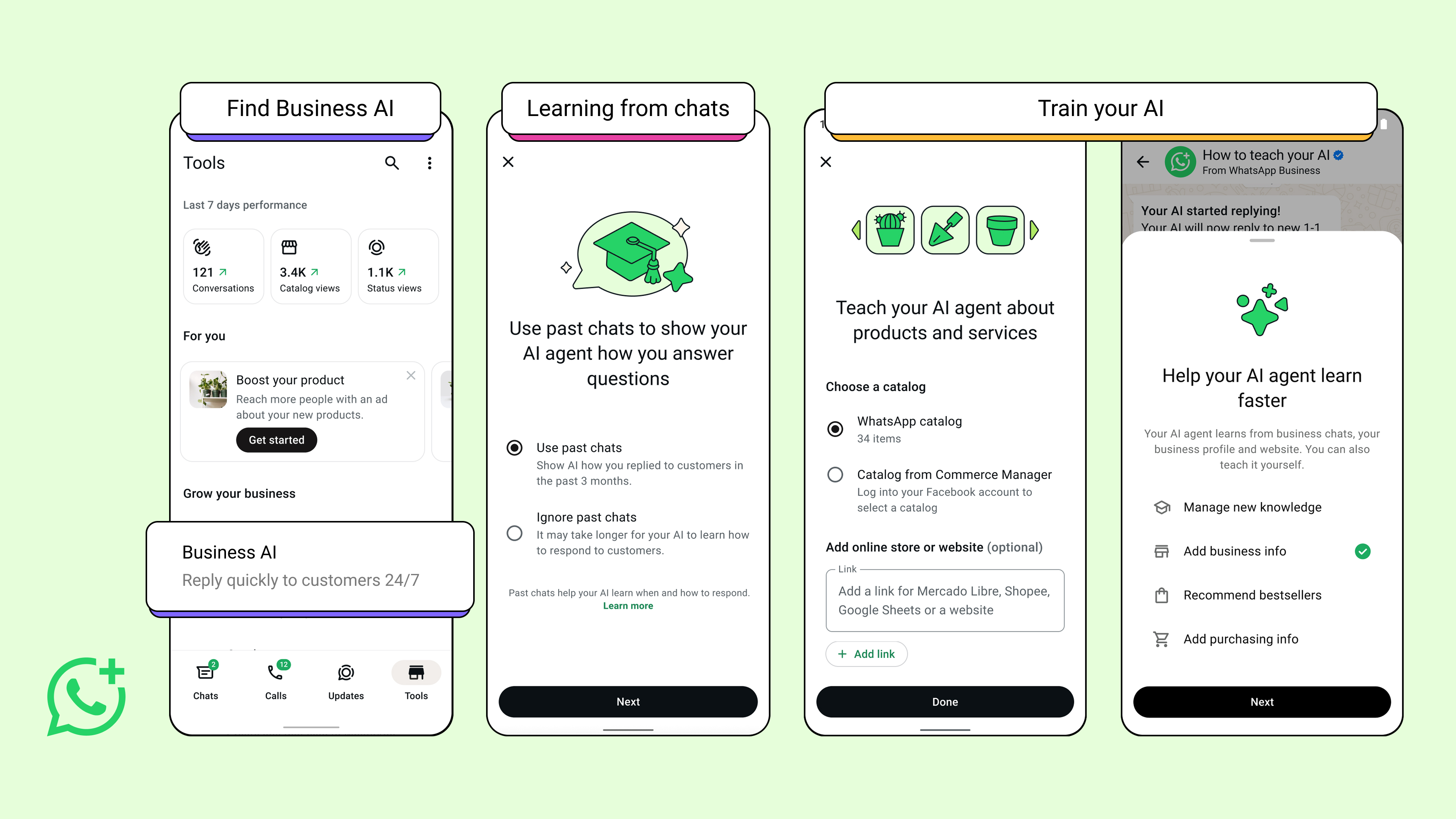
Creator onboarding on WhatsApp works by combining embedded signup through a WhatsApp Business Solution Provider with in-chat identity verification. A solo creator, marketplace seller, or independent service provider goes from zero to a verified, payment-ready WhatsApp number without downloading an app, filling in a web form, or waiting for a support agent. The verification, consent, and compliance steps live inside the same chat thread as the signup, not as a separate process bolted on afterward.
That last part matters more than most guides admit. Most WhatsApp onboarding content treats this as either a fintech KYC problem or a generic "no app needed" pitch. It's both, and the two halves have to be designed together, or you end up storing ID photos in a way that breaks POPIA the moment you go live.
What creator onboarding on WhatsApp actually means
Why 'creator onboarding' is different from general business onboarding
General WhatsApp business onboarding usually means one company setting up one number for customer support or sales. Creator onboarding means a platform onboarding hundreds or thousands of individual people, each of whom needs their own verified identity, their own payment method, and their own thread, often on a schedule that doesn't wait for a human reviewer.
The difference is volume and identity. A support number handles many customers through one business identity. A creator platform handles many creators, each of whom is a separate legal person who needs to prove who they are before they can get paid.
Why this is an underused pattern in most WhatsApp content
Most published material on WhatsApp automation covers customer support bots, order confirmations, or basic lead capture. Almost none of it covers the specific problem of onboarding a supply side, the sellers, freelancers, and creators who need to be verified and activated before they can transact. That gap exists because it's harder to build than a FAQ bot, and most agencies haven't shipped one.
Who this applies to: solo creators, marketplace sellers, independent service providers
This pattern fits anyone running a two-sided platform where the "supply" is individual people rather than registered companies: content creators getting paid per view or subscription, marketplace sellers listing their own goods, tutors, gig workers, and independent service providers who need a verified profile before a platform will route them customers or money.
Why emerging markets default to WhatsApp instead of an app
Zero-install adoption in South Africa and Africa
In South Africa, WhatsApp already sits on almost every smartphone that has data. Building a native app to onboard creators means asking someone to find storage space, wait for a download on a data bundle they're rationing, and trust an unfamiliar icon before they've even started. WhatsApp skips all of that because the app is already installed and already trusted.
App-store literacy and storage limits as real barriers
Low and mid-range Android devices dominate the market across South Africa and the rest of the continent, and many run on limited storage and prepaid data. App-store discovery also assumes a level of comfort with searching, reading reviews, and granting permissions that not every user has. A WhatsApp message with a link to start a chat removes every one of those steps.
Channel choice as a strategic decision, not a workaround
Choosing WhatsApp over an app isn't a workaround for a smaller budget. It's a decision about where the friction in your funnel actually lives. If the biggest drop-off in your onboarding funnel is "download the app," fixing that with a native chat flow on WhatsApp automation for South African businesses is a direct fix, not a compromise.
WhatsApp Business app vs API for onboarding creators
Where the free app runs out of road
The free WhatsApp Business app works fine for one person managing one phone and a manageable number of conversations. It has no automation, no API access, and no way to route thousands of new creator signups through a structured flow with document capture and conditional logic. Past a few dozen conversations a day, it becomes a full-time job for someone.
When the API and a BSP make sense for a single creator
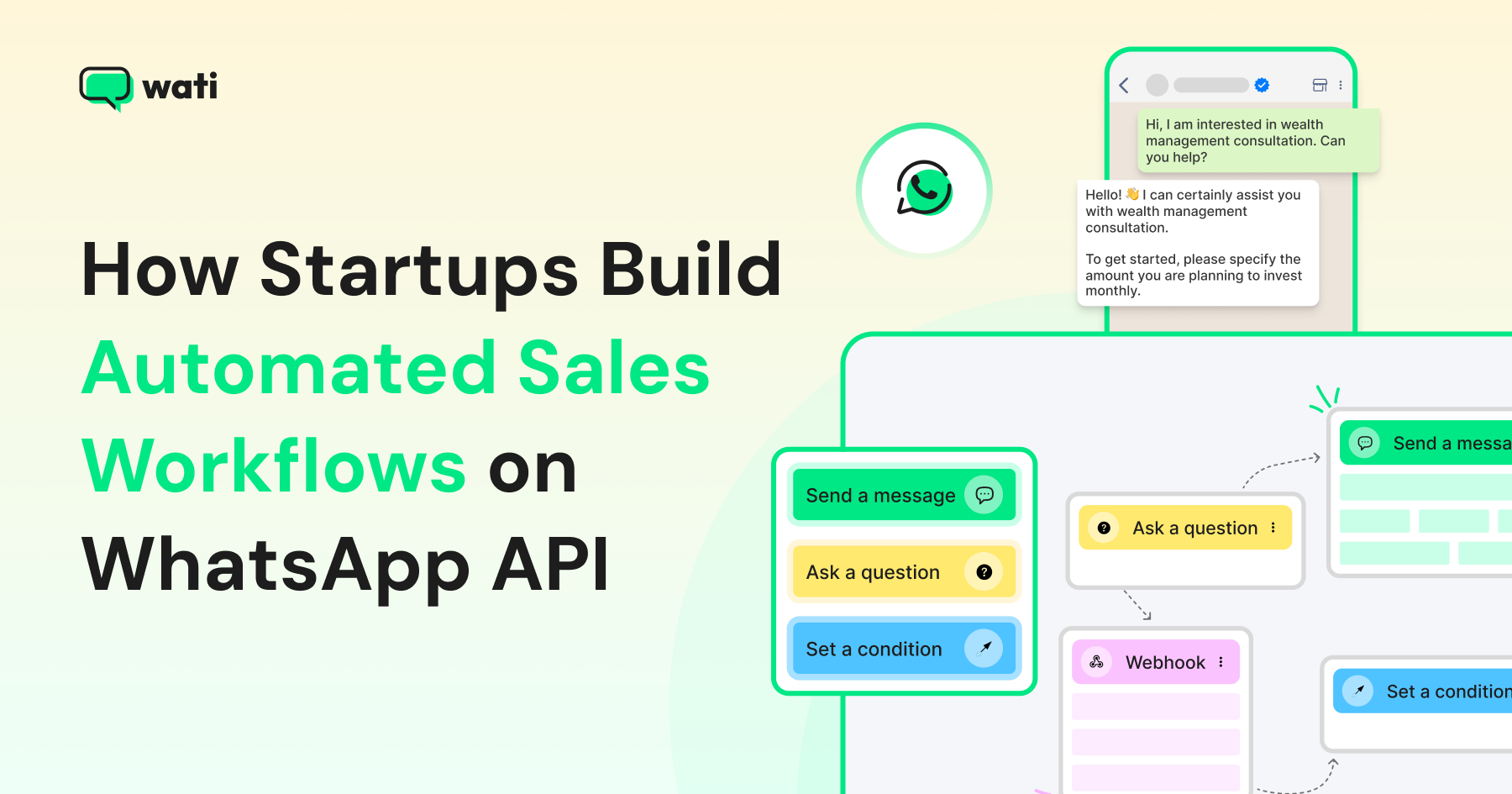
You don't need the API when you're onboarding one creator. You need it when you're onboarding creators at scale, on a repeatable flow, with document verification and payment activation built in. A WhatsApp Business Solution Provider gives you the API access, template management, and webhook infrastructure to run that flow programmatically instead of manually. For a full breakdown of the two paths, see WhatsApp Business API vs the app.
Embedded signup: going live in minutes instead of days
Meta's embedded signup flow lets a business connect a WhatsApp number to a BSP's system directly inside a web interface, without the multi-day manual verification that used to be standard. For creator platforms, this means a new market or a new batch of creators can be onboarded in a single session rather than a support ticket queue.
Verifying a creator's identity without a native app
Identity verification is where most WhatsApp onboarding builds fall apart, because chat isn't a form. You can't validate a field in real time the way a web app does, so the logic has to be built into the conversation itself.
How fintechs like Truora and Finnova handle KYC in a chat flow
Fintech KYC providers that specialise in conversational verification, such as Truora and Finnova, run identity checks by asking the user to send a selfie and a photo of an ID document directly in the chat, then matching the face to the document and checking the document against government or bureau databases in the background. The user never leaves WhatsApp, and the business never has to build its own document-matching pipeline from scratch.
Selfie, ID document, and BVN/ID-number verification patterns
The pattern that works across markets is consistent: ask for the ID number or document first, ask for a live selfie second, run a liveness and face-match check, then cross-reference against whatever national ID or bureau data source is available. In West Africa this often means a BVN check. In South Africa it usually means matching a South African ID number or passport against a verification API, sometimes alongside a basic sanctions or fraud screen.
What South African onboarding needs to check (POPIA, business verification)
For South African creators, onboarding needs to confirm identity against a valid ID number or passport, and where the creator is operating as a registered business, confirm that registration too. All of this has to happen with explicit, logged consent under POPIA, because an ID number and a photo of someone's face are both personal information, and a face photo close to biometric data, under the Act's definitions.
Building a POPIA-compliant onboarding flow
What data you're collecting and why consent has to be explicit
A creator onboarding flow typically collects a name, ID number, phone number, a selfie, an ID document photo, and banking details for payment activation. Under POPIA, each of those needs a clear, specific consent statement before it's collected, not a blanket "by using this service you agree" line buried at the end. The consent message has to say what's being collected and why, in the chat, before the document request goes out.
Storing ID documents and consent records correctly
ID photos and consent logs need to be stored with access controls, encryption at rest, and a defined retention period, not left sitting in a chat export or a shared spreadsheet. The consent event itself, timestamp, wording shown, and user response, needs to be logged separately from the document, because you need to prove consent existed even if the document is later deleted.
Where most WhatsApp onboarding flows get compliance wrong
The most common failure is treating verification as a feature to add after the flow works, rather than a constraint the flow is built around from the start. Teams build a fast, slick signup, get it working end to end, and only then ask where the ID photos are going. By then the storage pattern is already baked into the integration. The structural requirements for compliance mean: design consent and document handling before you write any automation code.
What a real onboarding flow looks like, step by step
Meta Business verification and number setup
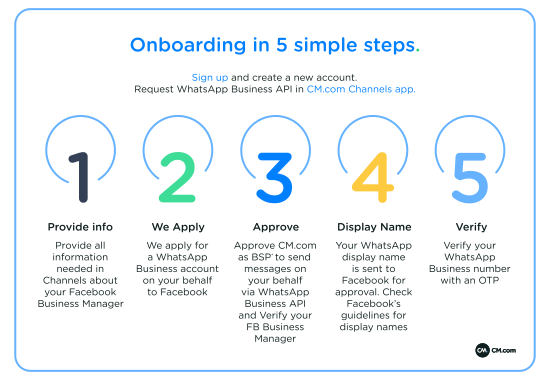
The flow starts before the creator ever messages anyone: the platform verifies its Meta Business account, connects a WhatsApp number through the BSP's embedded signup, and gets that number approved for business messaging. This is a one-time setup per platform, not per creator.
Template preparation and routing rules
Message templates for the welcome message, consent request, document request, and outcome notifications all need pre-approval from Meta before they can be sent outside a live conversation window. Routing rules then decide what happens next based on the creator's answers: ID verified and payment details valid routes to activation, failed match or expired document routes to a retry or human review.
Handoff to a human when verification fails or gets flagged
No automated KYC flow gets it right every time. Blurry photos, expired documents, and name mismatches all need a clear escalation path to a human reviewer who can look at the flagged case and either approve it manually or ask the creator to resubmit. Getting that handoff right, so the creator doesn't feel stuck in a loop, is its own design problem. See how human handoff works on WhatsApp for how that logic is typically structured.
What it costs to build creator onboarding on WhatsApp
BSP markups vs Meta's own conversation-based pricing
Meta charges per conversation, based on category and destination country, and that cost is separate from what a BSP charges on top. BSPs typically add a monthly platform fee plus either a markup per conversation or a flat seat price. For South African businesses, it's common to see BSP fees in the low thousands of rand per month before Meta's own conversation charges are added.
Build cost vs ongoing running cost in ZAR
The build cost, the actual engineering of the onboarding flow, verification integration, and payment activation, is usually the bigger number upfront, and the ongoing running cost is smaller but recurring. A detailed breakdown of both, with realistic ZAR figures for the South African market, is covered in what WhatsApp automation costs in ZAR.
When it's worth building custom vs using off-the-shelf tools
Off-the-shelf chatbot builders work fine for FAQ and support flows. They generally don't handle multi-step document capture, third-party KYC API calls, and conditional payment activation logic well, because that requires custom backend logic sitting behind the WhatsApp webhook. Once your onboarding flow needs verification and payment activation in one thread, custom build is usually the only option that holds up.
How Sagentics built this for a real creator platform
The problem: onboarding volume without a native app
A creator platform came to us needing to onboard a growing number of individual creators across South Africa without asking them to install an app. Manual onboarding through a web form and email verification was working, barely, but it couldn't scale past a small team reviewing signups by hand, and the drop-off between signup and first payment was high.
The build: embedded signup, verification, and payment activation in one flow
We set up embedded signup through a BSP, built a chat flow that requested consent, ID document, and selfie in sequence, integrated a third-party KYC API for the match and liveness check, and connected the verified creator's details to a payment activation step through accepting payments through WhatsApp with PayFast or Yoco. Failed or flagged verifications routed straight to a human reviewer instead of dead-ending the conversation. The full breakdown, including the exact flow logic, is documented in how we built a creator onboarding flow on WhatsApp.
What changed after launch
Onboarding time dropped from days to minutes for creators who passed automated verification cleanly, and the review team could focus only on flagged cases instead of every signup. The platform stopped needing to grow its manual review headcount in step with creator growth, because the automation carried the volume.
Common questions
What is the difference between the WhatsApp Business app and the WhatsApp Business API for onboarding new creators? The app is a free, manual tool for one person managing conversations by hand. The API, accessed through a BSP, allows automated flows, document capture, third-party integrations, and scaled onboarding across many creators at once, which the app cannot do.
How do you verify identity (KYC) over WhatsApp without a native app? By requesting a selfie and an ID document directly in the chat, then passing both to a KYC API, such as Truora or a similar provider, that runs face matching, liveness detection, and a database check. Results route back into the same conversation to confirm or flag the creator.
Can small creators or solo operators use the WhatsApp Business API, or is it only for large companies? Individual creators use the API through the platform onboarding them, not directly. The platform holds the BSP relationship and API access, and the creator simply chats with a verified business number. No creator needs their own API setup or technical knowledge.
What does WhatsApp Business API onboarding cost, and who charges onboarding fees, BSP markups or Meta? Meta charges per conversation based on category and country. BSPs add their own monthly platform fee and sometimes a markup per conversation on top of Meta's charge. Build cost for the actual onboarding flow is separate again, and usually the largest single line item upfront.
How long does WhatsApp Business verification take in South Africa? Business verification through embedded signup typically completes within minutes to a few hours if documentation is correct. Older manual verification paths could take days. Individual creator KYC inside the chat flow, once built, usually resolves in under a minute for clean submissions.
Is WhatsApp onboarding POPIA compliant for collecting ID documents and consent? It can be, but only if consent is explicit and logged before collection, documents are encrypted and access-controlled in storage, and retention periods are defined. WhatsApp itself doesn't make a flow compliant or non-compliant, the storage and consent design around it does.
How do businesses in emerging markets do onboarding without app-store friction? By running the entire signup, verification, and activation inside WhatsApp, which is already installed on the user's phone. This removes the download step, the storage requirement, and the unfamiliar-interface problem that native apps introduce for users on limited data and lower-end devices.
How do banks and fintechs use WhatsApp for KYC and account opening, and what can creator platforms learn from it? Banks and fintechs use WhatsApp to collect ID documents and selfies, run automated verification, and open accounts entirely in chat, treating compliance as a structural part of the flow rather than an afterthought. Creator platforms can copy this directly: design consent and verification into the chat sequence from day one.
Next steps
If you're building or fixing a creator onboarding flow on WhatsApp, reach out to Sagentics. We'll review your current flow against this pattern and talk through what needs to change.
Common questions
What is the difference between the WhatsApp Business app and the WhatsApp Business API for onboarding new creators?
The app is a free, manual tool for one person managing conversations by hand. The API, accessed through a BSP, allows automated flows, document capture, third-party integrations, and scaled onboarding across many creators at once, which the app cannot do.
How do you verify identity (KYC) over WhatsApp without a native app?
By requesting a selfie and an ID document directly in the chat, then passing both to a KYC API, such as Truora or a similar provider, that runs face matching, liveness detection, and a database check. Results route back into the same conversation to confirm or flag the creator.
Can small creators or solo operators use the WhatsApp Business API, or is it only for large companies?
Individual creators use the API through the platform onboarding them, not directly. The platform holds the BSP relationship and API access, and the creator simply chats with a verified business number. No creator needs their own API setup or technical knowledge.
What does WhatsApp Business API onboarding cost, and who charges onboarding fees, BSP markups or Meta?
Meta charges per conversation based on category and country. BSPs add their own monthly platform fee and sometimes a markup per conversation on top of Meta's charge. Build cost for the actual onboarding flow is separate again, and usually the largest single line item upfront.
How long does WhatsApp Business verification take in South Africa?
Business verification through embedded signup typically completes within minutes to a few hours if documentation is correct. Older manual verification paths could take days. Individual creator KYC inside the chat flow, once built, usually resolves in under a minute for clean submissions.
Is WhatsApp onboarding POPIA compliant for collecting ID documents and consent?
It can be, but only if consent is explicit and logged before collection, documents are encrypted and access-controlled in storage, and retention periods are defined. WhatsApp itself doesn't make a flow compliant or non-compliant, the storage and consent design around it does.
How do businesses in emerging markets do onboarding without app-store friction?
By running the entire signup, verification, and activation inside WhatsApp, which is already installed on the user's phone. This removes the download step, the storage requirement, and the unfamiliar-interface problem that native apps introduce for users on limited data and lower-end devices.
How do banks and fintechs use WhatsApp for KYC and account opening, and what can creator platforms learn from it?
Banks and fintechs use WhatsApp to collect ID documents and selfies, run automated verification, and open accounts entirely in chat, treating compliance as a structural part of the flow rather than an afterthought. Creator platforms can copy this directly: design consent and verification into the chat sequence from day one.
About Sagentics
Sagentics is an AI systems studio based in South Africa. We design and build WhatsApp automation, n8n workflows, and custom AI products for local and international clients. We write from systems we have actually shipped.
Start a WhatsApp conversation with SagenticsRelated reading
- WhatsApp automation in South Africa: what it costs and whether you need it
- WhatsApp Business API vs the app: which one your business actually needs
- AI customer service agent on WhatsApp: what it is, how it works, and what it costs in South Africa
- How to accept payments through WhatsApp in South Africa using PayFast or Yoco
- how we built a creator onboarding flow on WhatsApp
- WhatsApp Business API vs the app
- what actually needs to be true for POPIA compliance
- what WhatsApp automation costs in ZAR
- how human handoff works on WhatsApp
- accepting payments through WhatsApp with PayFast or Yoco
- WhatsApp automation for South African businesses