

 Start a conversation
WhatsApp and conversational AI automation
WhatsApp automation in South Africa: what it costs and whether you need it
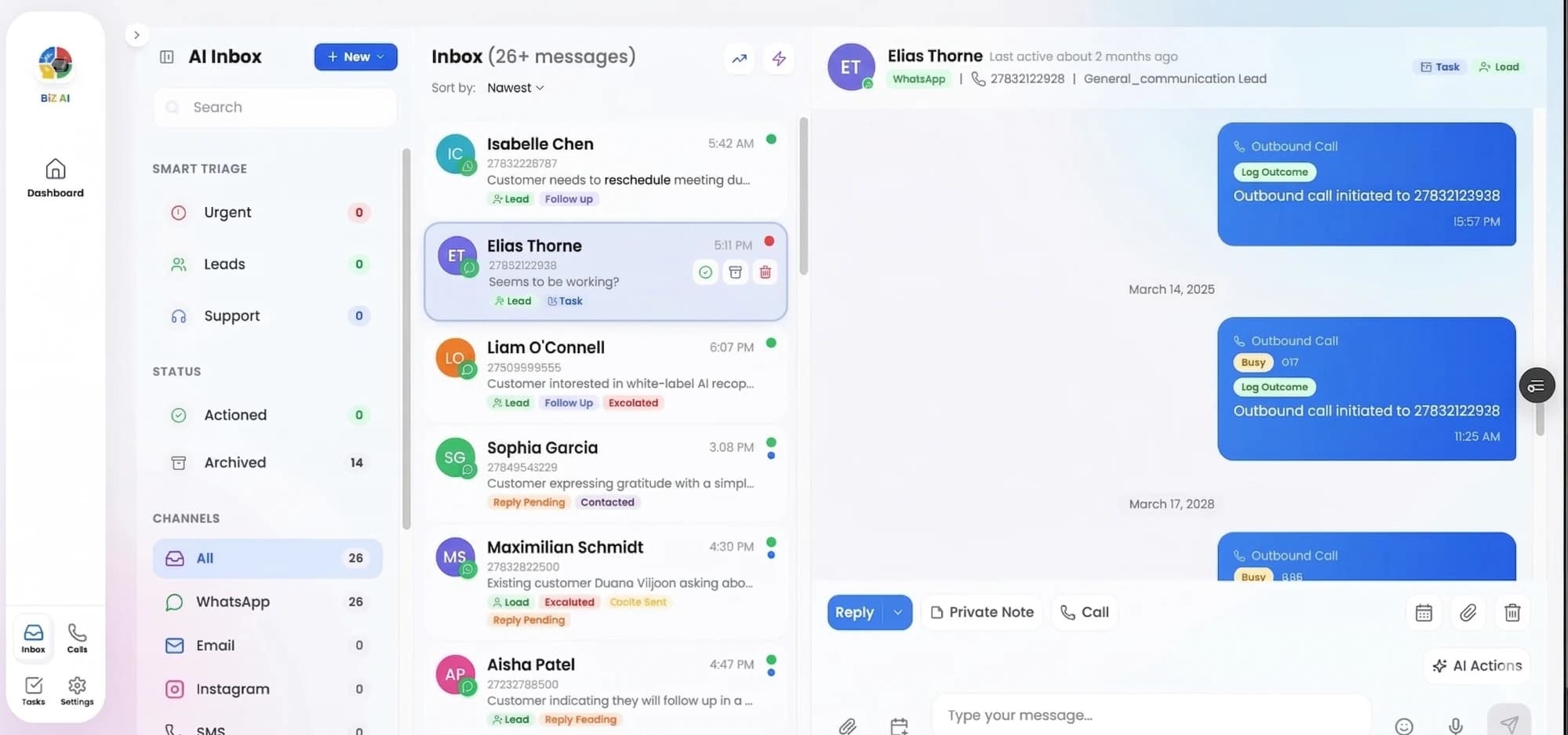
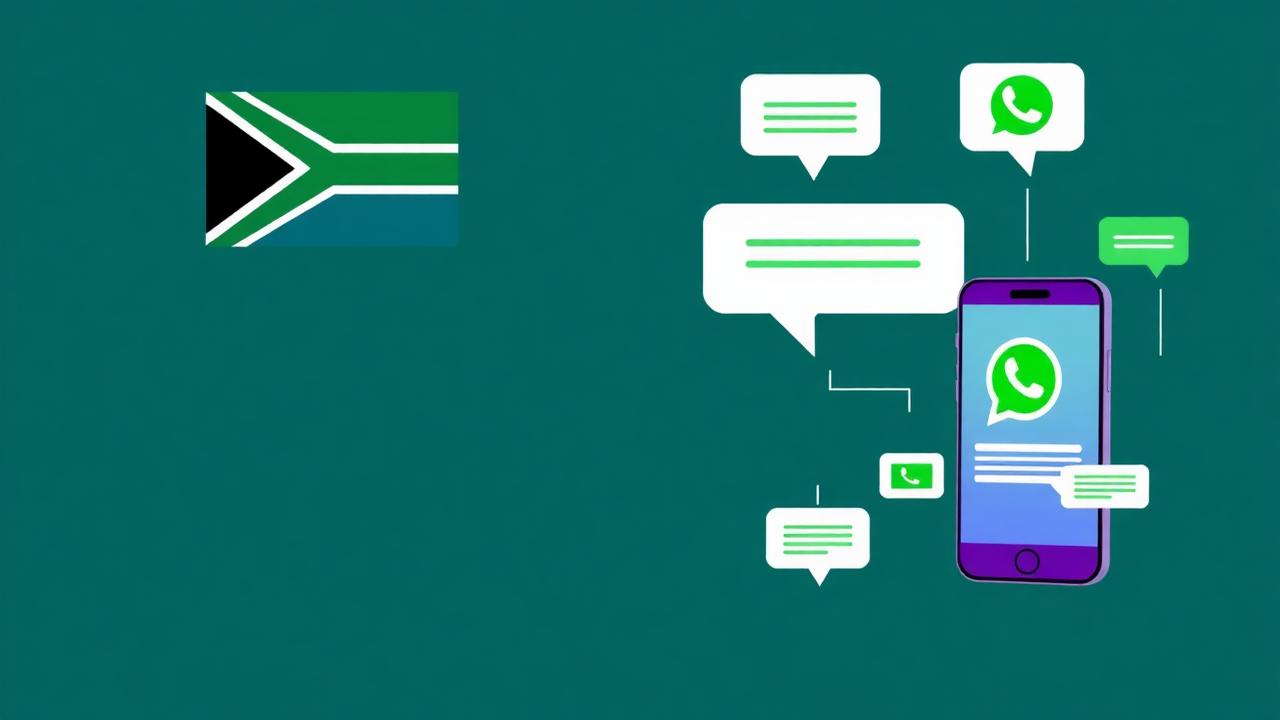
WhatsApp automation in South Africa means connecting the WhatsApp Business API, not the free app on your phone, to a workflow tool like n8n or a business solution provider (BSP) platform, so messages get sent and answered automatically. These messages get triggered by events from your CRM, your online store, or your booking system: a cart gets abandoned, an order ships, a lead fills in a form. The system replies without a human touching a keyboard. Get the plumbing right and it runs whether you're at your desk, asleep, or sitting through load shedding stage 6.
That's the short version. The rest of this article covers the parts that actually decide whether your build works: the API vs the app, what it costs in 2026 after Meta's pricing changes, whether it holds up under POPIA, and how to tell a real build from a reseller dashboard with a chatbot bolted on.
What WhatsApp automation actually means
WhatsApp Business app vs the Business API
The WhatsApp Business app is the free app you download on a phone. It's built for a single person managing a single number, with basic auto-replies and a catalogue. It does not connect to your CRM, it does not scale past one device logged in at a time, and it breaks the moment two staff members need to answer from the same number.
The WhatsApp Business API is different infrastructure entirely. It's cloud-based, it has no phone app tied to it, and it's designed to be called by other systems: your Shopify store, your booking calendar, your support desk, your AI agent. If you want automation that actually runs unattended, you need the API, not the app. We've written a full breakdown of WhatsApp Business API vs the app if you want the technical detail on rate limits, verification, and message templates.
Where n8n, BSPs, and Meta Cloud API fit in
Meta owns the API itself, called the Cloud API, and you can technically call it directly with code. Most businesses don't. Instead they go one of two routes.
A BSP (business solution provider) like Wati, AiSensy, or Twilio sits between you and Meta, giving you a dashboard, a shared inbox, and pre-built automation flows. You pay a monthly fee on top of Meta's message costs.
n8n is a workflow automation tool that connects directly to the Meta Cloud API (or to a BSP's API) and lets you build custom logic: if a customer says "yes," check stock in the CRM, generate an invoice, send a PayFast link, log it all to a spreadsheet or database. It's not a chat inbox with a nice UI. It's the engine room. For a look at how to connect WhatsApp to n8n, we've documented the setup end to end.
What "automated" actually covers: templates, chatbots, routing, payments
"Automation" gets used loosely. In practice it covers four separate things, and most businesses need a mix:
- Template messages: pre-approved notifications like order confirmations or appointment reminders, sent outside the 24-hour customer service window.
- Chatbots: rule-based or AI-driven replies that handle FAQs, qualify leads, or triage support tickets before a human steps in.
- Routing: sending a conversation to the right team member or department based on keywords, time of day, or customer history.
- Payments: sending a payment link or confirming a payment inside the same thread, tying WhatsApp to your actual revenue systems.
Why it matters more in South Africa than most markets
96% of SA internet users are on WhatsApp
South Africa doesn't have a fragmented messaging landscape. WhatsApp is the default. Data consistently puts WhatsApp penetration among SA internet users above 90%, and for most demographics it sits around 96%. That's not a channel you diversify away from. If you're building customer communication infrastructure and WhatsApp isn't the primary channel, you're building for a market that doesn't exist.
23+ hours a month spent on the app, ahead of Facebook and Instagram
South Africans spend more monthly time on WhatsApp than on Facebook or Instagram, north of 23 hours a month by most measures. That's not casual checking. That's a channel people live in, which means a message sent there gets seen, unlike an email sitting in a promotions tab or an SMS that gets ignored on principle.
Load shedding and why automation needs to survive it
This is the part most guides skip. A WhatsApp automation built on a laptop running n8n locally, or on a staff member's phone with the app open, dies the second the power does. A properly built system runs on cloud infrastructure, not local hardware, so a customer messaging you during stage 4 in Joburg still gets an instant reply because the workflow lives on a server in a data centre with its own power and connectivity, not on someone's desk in Sandton. This is one of the most overlooked reliability questions in the whole conversation, and it's a fair one to ask any vendor: where does this actually run, and what happens when my office loses power?
The highest-ROI automation flows for SA businesses
Not every automation is worth building. These five consistently pay for themselves fastest.
Abandoned cart recovery
A customer adds items to a cart on your Shopify or WooCommerce store and leaves. An automated WhatsApp message goes out an hour later with a direct link back to checkout, sometimes with a small incentive. Recovery rates on WhatsApp reminders routinely beat email recovery rates because the message actually gets opened.
Order and shipping notifications
Customers want to know their order is confirmed, paid, packed, and shipped, without calling to ask. Template messages triggered from your order system handle this automatically and cut support volume on "where's my order" queries, often the single biggest driver of unnecessary support tickets for online stores.
Lead qualification and appointment booking
A lead messages in from a Facebook ad or your website. Instead of a human manually asking "what service are you interested in" and "when works for you," a workflow asks the qualifying questions, checks calendar availability, and books the slot directly. We've built this specifically for service businesses; see our writeup on WhatsApp appointment booking automation for the flow logic.
Payment confirmation via PayFast, Yoco, or bank EFT
Once a customer agrees to buy, the same thread can generate a payment link and confirm receipt the moment it clears, whether that's through PayFast, Yoco, or a manual EFT reference match. This closes the loop without switching the customer to email or a separate portal. There's a full breakdown of accepting payments through WhatsApp with PayFast or Yoco if you're weighing which gateway fits your setup.
After-sale review requests
A simple, low-effort win: two days after delivery, an automated message asks for a Google review or a rating, with a direct link. Response rates are far higher than email because the message lands where the customer already is.
What it costs in 2026
Meta's October 2026 pricing overhaul and per-message categories
Meta shifted WhatsApp Business pricing away from the old conversation-based model toward per-message pricing, split into categories: marketing, utility, authentication, and service messages. Utility and service messages (order updates, support replies) remain cheap, often close to free within a service window. Marketing messages, the promotional broadcasts businesses lean on for re-engagement, now cost more per message than before. The practical effect: businesses that were spraying broad marketing blasts are now paying a real tax on volume, while businesses using WhatsApp for order confirmations, support, and personalised triggers are barely affected. If your strategy was "blast everyone," 2026 pricing punishes that. If your strategy is triggered, relevant messaging, it barely moves the needle.
Flat-rate SaaS platforms vs custom n8n builds
BSP platforms like Wati or AiSensy charge a flat monthly subscription (roughly R800 to R4,000+ depending on team size and features) on top of Meta's per-message fees. That's predictable and easy to budget, but you're limited to whatever automation logic their dashboard supports.
A custom n8n build has no monthly SaaS fee for the workflow engine itself (n8n is open source and can be self-hosted), but you pay for the build once and for hosting, plus Meta's message costs. The tradeoff is upfront cost for long-term flexibility, versus low upfront cost for a ceiling on what you can build later.
Rough ZAR ranges by business size
As a rough guide for 2026:
- Small business, single flow (e.g. order notifications only): R8,000 to R20,000 once-off build, plus BSP or hosting fees under R1,500/month.
- Mid-size business, multiple flows (cart recovery, booking, support routing): R25,000 to R70,000 build, plus R2,000 to R5,000/month running costs.
- Larger operation with an AI agent handling support and sales: R80,000 upward, scaling with complexity and message volume.
For a full cost breakdown by flow type and business size, see what WhatsApp automation really costs in ZAR.

POPIA and WhatsApp automation
Why WhatsApp marketing counts as electronic communication under Section 69
Section 69 of POPIA governs direct marketing by electronic communication, and WhatsApp qualifies. That means unsolicited marketing messages need prior consent (opt-in), a clear way to opt out, and honest identification of who's sending the message. This isn't a grey area specific to WhatsApp. It's the same rule that applies to SMS and email marketing, just less commonly enforced because fewer businesses have been caught doing it wrong on this channel, yet.
The Information Regulator's 2024/2025 enforcement notice
South Africa's Information Regulator has been increasingly active on direct marketing complaints, including guidance and enforcement notices touching electronic communications more broadly. The direction of travel is clear: regulators are paying attention to bulk messaging practices, and "we didn't think WhatsApp counted" is not going to be an accepted defence going forward.
Building consent and opt-out into the workflow instead of a checklist
Here's where most South African write-ups get it wrong. They treat POPIA as a compliance checklist bolted onto the automation after the fact: a PDF policy, a training session, a reminder to "remember to log consent." That approach relies on someone remembering to do the right thing, every time, forever.
We build it into the architecture instead. The same n8n workflow that sends a marketing message is the workflow that timestamps the opt-in at the moment it happens, logs it against the customer record in the CRM, and checks for opt-out keywords (STOP, unsubscribe) automatically before every send. If a customer replies STOP, the workflow updates their record instantly and no further marketing message can go out to that number, because the system checks the field before it fires, not because a person remembered to update a spreadsheet. Compliance becomes a side effect of how the system is built, not a separate task someone has to remember to do. If you want the fuller technical answer, we've covered whether WhatsApp automation is POPIA compliant in detail, including what the opt-in and opt-out logic actually looks like inside a workflow.
Build vs buy: n8n vs Wati, AiSensy, and other BSPs
What you get with a SaaS BSP
BSP platforms give you a working system fast: a shared inbox, basic automation builders, template message management, and support if something breaks. For a business that needs standard flows (broadcast, basic chatbot, shared inbox for a small team), this is often the right call. You're not paying for custom engineering, you're paying for a maintained product.
What you get with a custom n8n build
A custom build gets you logic a dashboard can't offer: multi-step decision trees that check inventory, calculate shipping, cross-reference a customer's order history, generate a PDF invoice, or hand off to an AI agent that reasons through a support query instead of matching keywords. It also means the automation isn't boxed into whatever features the SaaS vendor decided to ship this quarter. We compare this tradeoff in more depth in n8n vs Make vs Zapier, including why n8n specifically tends to win for WhatsApp-heavy builds involving multiple data sources.
Data ownership, vendor lock-in, and long-term cost
This is the part that bites businesses two years in. With a BSP, your customer data, conversation history, and automation logic live inside their platform. Switch providers and you're often starting from scratch, exporting what you can and rebuilding the rest. With a self-hosted n8n build, the data lives in your own database or CRM, and the workflow logic is yours, portable, and inspectable. Neither is universally right. A five-person business answering forty messages a day doesn't need to own its infrastructure. A business processing thousands of orders a month, with support tied to sales tied to fulfilment, usually ends up wanting the control.
Setting up correctly from day one
Meta Cloud API vs grey routes
There are unofficial ways to send WhatsApp messages programmatically that don't go through Meta's approved Cloud API or an approved BSP. These "grey routes" exist and some vendors quietly use them because they're cheaper or faster to set up. They also violate WhatsApp's terms of service and carry real risk: number bans, message blocking, and no recourse when Meta shuts it down, which they do, without warning. If a vendor can't clearly explain that your setup runs through Meta's official Cloud API or an approved BSP, treat that as a serious red flag, not a minor technicality.
Why you need a dedicated number, not your personal WhatsApp
The API requires a dedicated number that isn't already active on the regular WhatsApp app, and once it's registered to the API it can't run the consumer app anymore. This means you can't just automate your existing personal or shop number without first migrating it. Most businesses buy a new number or port an existing landline/VoIP number specifically for this purpose, keep the old number for anything that must stay manual, and route all customer-facing communication to the new API number over time.
Realistic setup timeline
Meta business verification, template approval, and BSP or Cloud API onboarding typically takes one to three weeks, sometimes faster, sometimes longer if your business documentation needs corrections or Meta's review queue is backed up. Building the actual automation logic on top of that, once the number is live, ranges from a few days for a single simple flow to four to six weeks for a multi-flow build with CRM integration and an AI agent layered in. Anyone promising a fully custom, multi-flow build live in 48 hours is either overselling or cutting corners on testing.
How to tell if a build is legit
Questions to ask an automation agency
Before signing anything, ask directly: Does this run on the official Meta Cloud API or an approved BSP? Where is the workflow hosted, and what happens if it goes down? How is consent logged and how are opt-outs enforced, technically, not just in a policy document? What happens to my data if I stop working with you? Can I see the actual workflow, not just a demo of the chat interface? A vendor who's actually built these systems will answer all five without hesitation. One who's reselling a template will get vague fast.
Red flags: unofficial APIs, no POPIA plan, no error handling
Watch for a few specific things: pricing that seems too cheap relative to what BSPs charge (often a sign of a grey route), no answer when you ask how opt-outs are handled technically, and no mention of error handling or fallback logic, meaning what happens when a payment gateway times out or a CRM lookup fails mid-conversation. A workflow with no error handling doesn't fail gracefully, it fails silently, and you find out when a customer complains. We've laid out a full checklist for how to check a WhatsApp automation agency is legit if you want the longer version before you commit budget.
If you're weighing whether to go further than basic notifications, it's worth reading about an AI customer service agent on WhatsApp, and how one creator platform used the same approach for onboarding in how we built WhatsApp onboarding for a creator platform.
Common questions
What is the difference between the WhatsApp Business app and the WhatsApp Business API? The app is a free, single-device tool for one person managing one number manually. The API is cloud infrastructure with no phone app attached, built to connect to CRMs, stores, and automation tools, and to handle high message volumes across multiple staff or fully automated flows without a phone needing to stay online.
How much does WhatsApp automation cost in South Africa? Costs range from roughly R8,000 for a single-flow build on a small business, up to R70,000+ for multi-flow custom builds with CRM and payment integration. Monthly running costs (BSP fees plus Meta message costs) typically sit between R500 and R5,000, depending on volume and whether you use a SaaS platform or self-hosted n8n.
Is WhatsApp automation POPIA compliant? It can be, but compliance depends on how the workflow is built, not just a written policy. Consent needs to be logged at the point of opt-in, opt-out keywords need to be honoured automatically, and marketing messages need genuine prior consent under Section 69. Built into the automation logic itself, compliance happens by default rather than by memory.
Can I use my personal WhatsApp number for the API? Not directly. A number already active on the standard WhatsApp app can be migrated to the API, but once registered to the API it can no longer run the consumer app. Most businesses register a new dedicated number for automation rather than migrating an existing personal or shopfront number.
How does WhatsApp pricing compare to SMS in South Africa? WhatsApp utility and service messages are generally cheaper per message than SMS in South Africa, and offer far richer content (images, buttons, PDFs) than a 160-character SMS. Marketing messages on WhatsApp cost more post-2026 pricing changes, but open and read rates on WhatsApp still typically beat SMS by a wide margin.
How long does WhatsApp API setup take? Meta business verification and template approval usually takes one to three weeks. Building automation logic on top ranges from a few days for one simple flow to four to six weeks for a multi-flow build with CRM integration, payment handling, and AI-driven responses layered in.
Which automation flows give the best ROI for SA businesses? Abandoned cart recovery, order and shipping notifications, lead qualification with appointment booking, payment confirmation, and post-sale review requests consistently deliver the fastest payback, because they reduce manual support hours and recover revenue that would otherwise be lost to slow follow-up.
Should I use n8n, Make, Zapier, or a BSP like Wati or AiSensy? BSPs suit businesses that need standard flows fast without custom logic. n8n suits businesses needing complex, multi-system automation (CRM, inventory, payments, AI) with full control over data and workflow logic. Zapier and Make sit in between but tend to get expensive and limited fast for WhatsApp-specific, high-volume use cases.
What changes with Meta's October 2026 WhatsApp pricing update? Meta moved to per-message pricing split into marketing, utility, authentication, and service categories. Marketing messages cost more than under the old conversation-based model, while utility and service messages (order updates, support) remain cheap. Businesses using triggered, relevant messaging are barely affected; broad marketing blasts now cost meaningfully more.
Does WhatsApp automation still work during load shedding? Yes, if it's built correctly. A workflow hosted on cloud infrastructure keeps running through power outages because it isn't dependent on a phone or laptop staying powered on at your premises. Automation that relies on a local device or someone's personal phone with the app open will go down the moment the power does.
If you want to talk through what a WhatsApp automation setup would actually look like for your business, message Sagentics WhatsApp automation on WhatsApp and we'll walk you through it, no pressure, no pitch deck.
Common questions
What is the difference between the WhatsApp Business app and the WhatsApp Business API?
The app is a free, single-device tool for one person managing one number manually. The API is cloud infrastructure with no phone app attached, built to connect to CRMs, stores, and automation tools, and to handle high message volumes across multiple staff or fully automated flows without a phone needing to stay online.
How much does WhatsApp automation cost in South Africa?
Costs range from roughly R8,000 for a single-flow build on a small business, up to R70,000+ for multi-flow custom builds with CRM and payment integration. Monthly running costs (BSP fees plus Meta message costs) typically sit between R500 and R5,000, depending on volume and whether you use a SaaS platform or self-hosted n8n.
Is WhatsApp automation POPIA compliant?
It can be, but compliance depends on how the workflow is built, not just a written policy. Consent needs to be logged at the point of opt-in, opt-out keywords need to be honoured automatically, and marketing messages need genuine prior consent under Section 69. Built into the automation logic itself, compliance happens by default rather than by memory.
Can I use my personal WhatsApp number for the API?
Not directly. A number already active on the standard WhatsApp app can be migrated to the API, but once registered to the API it can no longer run the consumer app. Most businesses register a new dedicated number for automation rather than migrating an existing personal or shopfront number.
How does WhatsApp pricing compare to SMS in South Africa?
WhatsApp utility and service messages are generally cheaper per message than SMS in South Africa, and offer far richer content (images, buttons, PDFs) than a 160-character SMS. Marketing messages on WhatsApp cost more post-2026 pricing changes, but open and read rates on WhatsApp still typically beat SMS by a wide margin.
How long does WhatsApp API setup take?
Meta business verification and template approval usually takes one to three weeks. Building automation logic on top ranges from a few days for one simple flow to four to six weeks for a multi-flow build with CRM integration, payment handling, and AI-driven responses layered in.
Which automation flows give the best ROI for SA businesses?
Abandoned cart recovery, order and shipping notifications, lead qualification with appointment booking, payment confirmation, and post-sale review requests consistently deliver the fastest payback, because they reduce manual support hours and recover revenue that would otherwise be lost to slow follow-up.
Should I use n8n, Make, Zapier, or a BSP like Wati or AiSensy?
BSPs suit businesses that need standard flows fast without custom logic. n8n suits businesses needing complex, multi-system automation (CRM, inventory, payments, AI) with full control over data and workflow logic. Zapier and Make sit in between but tend to get expensive and limited fast for WhatsApp-specific, high-volume use cases.
What changes with Meta's October 2026 WhatsApp pricing update?
Meta moved to per-message pricing split into marketing, utility, authentication, and service categories. Marketing messages cost more than under the old conversation-based model, while utility and service messages (order updates, support) remain cheap. Businesses using triggered, relevant messaging are barely affected; broad marketing blasts now cost meaningfully more.
Does WhatsApp automation still work during load shedding?
Yes, if it's built correctly. A workflow hosted on cloud infrastructure keeps running through power outages because it isn't dependent on a phone or laptop staying powered on at your premises. Automation that relies on a local device or someone's personal phone with the app open will go down the moment the power does.
About Sagentics
Sagentics is an AI systems studio based in South Africa. We design and build WhatsApp automation, n8n workflows, and custom AI products for local and international clients. We write from systems we have actually shipped.
Start a WhatsApp conversation with SagenticsRelated reading
- WhatsApp Business API vs the app: which one your business actually needs
- AI customer service agent on WhatsApp: what it is, how it works, and what it costs in South Africa
- How to accept payments through WhatsApp in South Africa using PayFast or Yoco
- WhatsApp appointment booking automation: what it is and how it works in South Africa
- WhatsApp Business API vs the app
- what WhatsApp automation really costs in ZAR
- whether WhatsApp automation is POPIA compliant
- accepting payments through WhatsApp with PayFast or Yoco
- WhatsApp appointment booking automation
- how to connect WhatsApp to n8n
- n8n vs Make vs Zapier
- the real ROI formula for a WhatsApp support agent
- how to check a WhatsApp automation agency is legit
- an AI customer service agent on WhatsApp
- how we built WhatsApp onboarding for a creator platform
- Sagentics WhatsApp automation